

How Double-Wall Stainless Steel Water Bottles Serve Both Hot and Cold Beverages?
2026-10-09
A product development team is testing a new line of Stainless Steel Water Bottles. The specification claims 24-hour cold retention and 12-hour hot retention. The cold test passes: after 24 hours, the ice water is still below 10°C. The hot test fails: after 8 hours, the coffee has dropped from 90°C to 55°C, which is below the 60°C minimum. The team examines the bottle. The vacuum layer is intact. The failure is not in the insulation. It is in the lid. The lid has a wide mouth and a thin gasket, which allows heat to escape through convection and conduction. This guide explains why hot and cold retention require different design considerations and how to balance them.
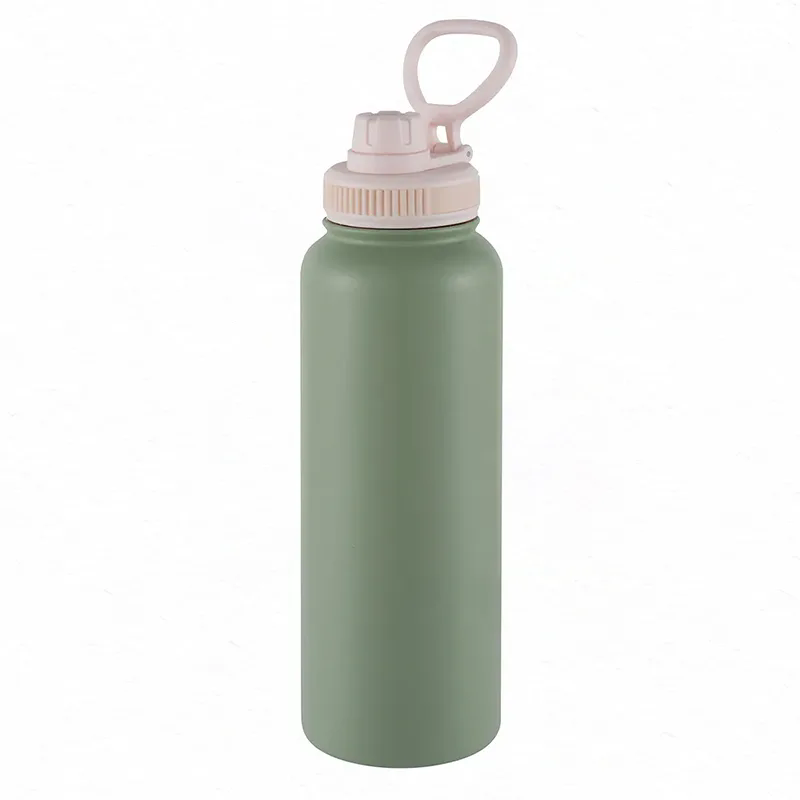
1. How Does Vacuum Insulation Suppress Heat Transfer Differently for Hot and Cold?
A double-wall Stainless Steel Water Bottles uses a vacuum layer between the inner and outer walls to suppress heat transfer. The vacuum eliminates conduction and convection between the walls. The remaining heat transfer path is radiation, which is reduced by polishing the inner wall or applying a copper coating. For cold beverages, the temperature difference between the beverage and the ambient air is typically 15 to 25°C. For hot beverages, the difference is 50 to 70°C. The larger temperature difference drives heat transfer at a higher rate, so hot beverages lose heat faster than cold beverages gain heat. The table below shows the heat transfer rate for a 500 ml bottle at different temperature differences.
| Beverage type | Initial temperature | Ambient temperature | Temperature difference | Heat transfer rate (W) |
| Ice water | 0°C | 25°C | 25°C | 0.8 |
| Cold water | 10°C | 25°C | 15°C | 0.5 |
| Hot coffee | 90°C | 25°C | 65°C | 2.1 |
| Hot tea | 80°C | 25°C | 55°C | 1.8 |
The heat transfer rate for hot coffee is 2.6 times higher than for ice water because the temperature difference is 2.6 times larger. This is why a Stainless Steel Water Bottles that keeps ice for 24 hours may only keep coffee hot for 8 to 10 hours. The insulation is the same. The physics is different. In our factory, we test both hot and cold retention for every model and report the actual performance. Yongkang Jianyang Metal Co.,Ltd. has been manufacturing double-wall bottles for over 15 years.
2. How Does the Lid Design Affect Hot and Cold Retention?
The lid is the most common weak point in thermal performance. Heat can escape through the lid by three paths: conduction through the lid material, convection through the gap between the lid and the bottle, and radiation from the exposed liquid surface. A wide-mouth bottle exposes a larger liquid surface, which increases radiation and evaporation. A narrow-mouth bottle reduces the exposed surface but is harder to clean and fill. The table below shows the effect of lid design on hot and cold retention for a 500 ml bottle.
| Lid type | Mouth diameter | Cold retention (0°C to 10°C) | Hot retention (90°C to 60°C) | Cleaning difficulty |
| Wide mouth, thin gasket | 50 mm | 18 hours | 6 hours | Easy |
| Wide mouth, thick gasket | 50 mm | 22 hours | 9 hours | Easy |
| Narrow mouth, thick gasket | 30 mm | 24 hours | 12 hours | Moderate |
| Narrow mouth, vacuum lid | 30 mm | 26 hours | 14 hours | Difficult |
The narrow mouth with a thick gasket provides the best thermal performance for both hot and cold. The thick gasket reduces conduction through the lid, and the narrow mouth reduces radiation from the liquid surface. In our factory, we offer both wide-mouth and narrow-mouth Stainless Steel Water Bottles. For customers who prioritize hot retention, we recommend the narrow-mouth design with a thick silicone gasket. For customers who prioritize easy cleaning and adding ice cubes, we recommend the wide-mouth design with a thick gasket.
3. What Are the Capacity and Shape Considerations for Hot and Cold Use?
The capacity and shape of the bottle affect the thermal performance. A larger capacity has more thermal mass, so it takes longer to heat up or cool down. A smaller capacity reaches the ambient temperature more quickly. A tall, narrow bottle has less surface area per unit volume than a short, wide bottle, so it loses heat more slowly. The table below shows the thermal performance for different capacities and shapes.
| Capacity | Shape | Surface area to volume ratio | Cold retention | Hot retention |
| 350 ml | Tall, narrow | 0.85 cm⁻¹ | 20 hours | 10 hours |
| 500 ml | Tall, narrow | 0.72 cm⁻¹ | 24 hours | 12 hours |
| 750 ml | Tall, narrow | 0.62 cm⁻¹ | 28 hours | 14 hours |
| 500 ml | Short, wide | 0.95 cm⁻¹ | 18 hours | 8 hours |
| 750 ml | Short, wide | 0.82 cm⁻¹ | 22 hours | 10 hours |
The 750 ml tall narrow bottle has the best thermal performance because it has the lowest surface area to volume ratio. However, it is also the heaviest and the least portable. For everyday use, the 500 ml tall narrow bottle offers a good balance of capacity and thermal performance. In our factory, we produce Stainless Steel Water Bottles in capacities from 350 ml to 1,000 ml and in both tall and short shapes. We can advise on the optimal shape for the intended beverage type.
4. How Should Hot and Cold Beverages Be Prepared for Optimal Performance?
The way the beverage is prepared affects the thermal performance. For cold beverages, pre-chilling the bottle with ice water for 5 minutes before filling improves the retention by 2 to 3 hours. For hot beverages, pre-heating the bottle with hot water for 5 minutes improves the retention by 1 to 2 hours. The fill level also matters. A full bottle retains temperature better than a partially filled bottle because there is less air space. The table below shows the effect of pre-conditioning and fill level on thermal performance.
| Preparation method | Cold retention improvement | Hot retention improvement |
| No pre-conditioning | Baseline | Baseline |
| Pre-chill with ice water (5 min) | +2 – 3 hours | N/A |
| Pre-heat with hot water (5 min) | N/A | +1 – 2 hours |
| Fill to 95% capacity | +1 – 2 hours | +1 – 2 hours |
| Fill to 50% capacity | -3 – 4 hours | -2 – 3 hours |
User tip: For maximum hot retention, pre-heat the bottle with hot water, fill to 95 percent capacity, and use a narrow-mouth lid with a thick gasket. For maximum cold retention, pre-chill with ice water, fill to 95 percent capacity, and use a wide-mouth lid with a thick gasket. These simple steps can add 2 to 4 hours of thermal performance without any change to the bottle.
Frequently Asked Questions About Double-Wall Stainless Steel Water Bottles for Hot and Cold Beverages
Summary for Product Managers and Buyers
Double-wall Stainless Steel Water Bottles can serve both hot and cold beverages, but the performance is not symmetric. Hot beverages lose heat faster because the temperature difference is larger. The lid design, mouth diameter, and gasket thickness are the most important factors for hot retention. The capacity and shape affect the surface area to volume ratio, which determines the rate of heat transfer. By selecting the right bottle configuration and using proper pre-conditioning, users can achieve 12 to 14 hours of hot retention and 24 to 28 hours of cold retention. Yongkang Jianyang Metal Co.,Ltd. has been manufacturing double-wall bottles for over 15 years and provides full thermal performance data for all of our products.
Yongkang Jianyang Metal Co.,Ltd. manufactures Stainless Steel Water Bottles in a range of capacities, shapes, and lid designs. We provide thermal performance test reports and can customize the bottle for specific hot or cold applications.