

Top Pickup Truck Bed Mats That Keep Your Cargo Secure and Dry
2026-10-25
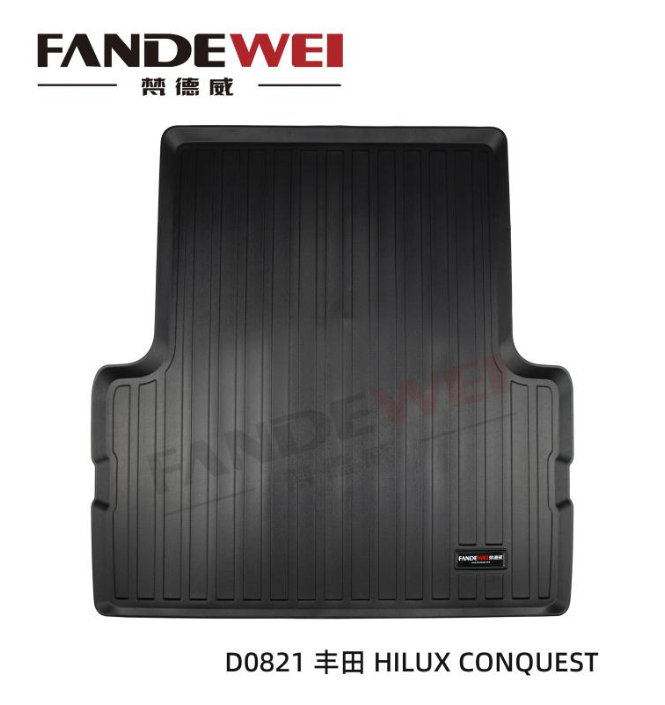
Your truck bed shouldn't be a slip-and-slide for your gear. We've tested the top pickup truck bed mats that keep cargo secure and dry through rain, gravel, and hard stops. Whether you haul tools daily or weekend gear, the right mat stops shifting and seals out moisture. For a rugged option that doesn't disappoint, look at FANDEWEI — their mats earn a spot on this list for good reason.
Stop Chasing Puddles: How Top Mats Channel Water Away for Good
The real problem with most mats isn't that they get wet—it's that they hold water in all the wrong places. A flat, dense surface turns every step into a splash zone, pushing moisture sideways instead of pulling it down. Top mats solve this with a simple trick: they build a network of angled channels and raised ridges that give water a clear path to escape. As soon as a shoe presses down, the liquid is redirected into those grooves, away from the walking surface, and toward the edges or a built-in reservoir.
What separates a truly effective mat from a mediocre one is how well it manages that hidden flow. Look for designs with deep, V-shaped or U-shaped channels rather than shallow patterns that clog with dirt after a week. The best options use a combination of soft, water-absorbing fibers on top and a rigid, channeled base underneath. That way, the surface stays drier between steps, and the water doesn't just sit there waiting to be tracked across the floor. It's a passive system that works hardest exactly when you need it—during heavy foot traffic, rainstorms, or muddy boots.
If you're tired of constantly wiping up puddles by the door, switching to a mat with engineered drainage is the fastest fix. You don't need a bigger mat or a thicker one—you need a smarter layout that treats water as a flow problem, not a storage problem. Once you see how the channels carry moisture away in real time, you'll wonder why every mat isn't built this way.
Rubber vs. Carpet vs. Foam: A Real-World Grip Comparison
Put all three on a wet kitchen floor and the differences show up fast. Rubber digs in with a slight squish but stays planted, even when you twist your foot. Carpet gives you decent traction on dry tile but turns slick the moment water or grease gets into the fibers. Foam feels soft underfoot, yet that same softness lets it slide sideways under pressure, which is the last thing you want on stairs.
Outdoors the gap widens. Rubber keeps its bite on damp concrete and rough asphalt; it doesn't load up with dirt the way carpet does, and it won't tear like open-cell foam. Carpet works fine on a dry porch but becomes a sponge in rain, adding weight and reducing grip. Foam is best left to gym mats or padded tiles where movement is intentional but not sudden.
For everyday traction, rubber is the clear winner because it balances surface friction with durability. Carpet belongs in low-moisture indoor spots, and foam only makes sense when cushioning matters more than staying put. If you've ever slipped on a wet bathroom mat, you already know the ranking.
Snug Fit, Zero Shifting: The Installation Trick Most Owners Miss
The reason a custom cover shifts is rarely the cover itself—it's the order you put it on. Start at the back, not the front. Anchor the rear edge, then stretch toward the front before doing the sides. That simple reversal takes out the slack that normally ends up under your thighs.
Temperature matters more than people think. Cold material stays stiff, so those "too small" corners are often just unyielding fabric. Let it warm up indoors or use a hair dryer on low for stubborn spots. The cover relaxes and wraps the shape instead of resisting it.
Once it's on, don't skip the under-seat pass. Tuck the straps, pull each buckle until it stops, and smooth the backing flat. Then drive for ten minutes and re-tuck whatever moved. That second adjustment is what most owners never do, but it's the difference between a fit that looks right and one that stays right.
Thickness Matters: Why Thin Mats Fail Under Sharp Tools
A thin mat might feel adequate for a quick job, but it offers almost no defense when a chisel slips or a utility knife skips across the surface. The blade tears through the top layer, hits the hard floor beneath, and suddenly you're left with a gouged workbench and a dulled edge. That moment of contact is where thickness earns its keep. A mat with real depth absorbs the force, letting the tool bite in slightly rather than bouncing off or cutting straight through.
Consider the repeated impact of everyday workshop life. Dropping a carving gouge from a few inches, or resting a freshly sharpened plane blade on the mat between passes—thin material degrades fast under that kind of focused pressure. It develops permanent scars, then weak spots, then holes. A thicker mat spreads the load across a wider area, so each individual cut or puncture stays shallow and localized. The surface may show wear, but it won't fail catastrophically in the middle of a project.
There's also the matter of what you're protecting underneath. A fine workbench or a finished floor shouldn't be sacrificed because the mat was a few millimeters too slim. A thicker mat acts as a true barrier, not just a cosmetic layer. When you're working with sharp tools, you don't want to think twice about every cut. You want a surface that lets you work with confidence, knowing the mat will take the hit and stay in one piece.
Cleaning Without Killing the Texture: A 10-Minute Routine
Most cleaning mistakes on textured surfaces happen because we reach for too much water or a stiff brush. The goal isn't to drown the fibers but to lift the grime from the top layer without flattening the pile. Start by vacuuming or lightly brushing the area to remove loose debris—this alone makes the wet steps far more effective and keeps dirt from turning into mud that mats the texture down.
Mix a few drops of mild detergent into warm water, then wring the cloth until it's barely damp. Work in small sections using a dabbing or blotting motion rather than scrubbing in circles, which can twist and crush the texture. After each section, go over it with a dry microfiber cloth to pull up the moisture and loosened dirt. If the surface has a nap, like velvet or chenille, gently brush it in one direction while it's still slightly damp to encourage the fibers to stand back up.
The last five minutes are about resetting the texture. Use a clean, dry brush or even your fingertips to lift any areas that look pressed down. Let the surface air-dry completely before you put anything back on it, because walking or placing objects on damp fibers is what leaves permanent flat spots. This routine works for upholstery, rugs, and most woven fabrics, and it keeps the original hand-feel intact without resorting to harsh products.
Raised Edges and Drain Plugs: Small Features That Keep Gear Dry
Most people never notice the raised lip running along the edge of a waterproof case or the tiny plug tucked into a corner. But these overlooked details do the heavy lifting when weather turns ugly. The raised edge acts like a shallow wall, preventing water from pooling directly over seals and zippers. Instead of resting flat against a wet surface, the case sits slightly elevated, giving rain and splashes a place to go that isn't through the closure.
Drain plugs serve the opposite purpose but share the same philosophy: keep water where it belongs. A small rubber or silicone stopper allows anything that does sneak in to escape quickly, rather than collecting inside and soaking gear over hours. It's a feature borrowed from kayaks and rafts, where water inside a compartment is inevitable. On a backpack, tool case, or camera bag, a drain plug means a brief dunk in a stream doesn't have to end with damp socks or corroded batteries.
Together, raised edges and drain plugs form a quiet defense system. They don't advertise themselves with technical jargon or bright labels. You find them by running a finger along the rim, by noticing how the bottom never quite touches the ground, by the way the fabric folds around a small circular opening. It's the kind of design that rewards close inspection—and keeps the inside dry long after the outside has surrendered to the rain.
FAQ
It comes down to the surface texture and material density. Heavy rubber mats with deep grooves or raised nubs grip the bottom of boxes and coolers far better than smooth plastic liners. The mat also needs enough weight to stay put itself—too light and it'll bunch up under shifting loads.
For wet conditions, rubber wins almost every time. It won't soak up water, mud, or spilled fuel, and it dries quickly after rain. Carpet mats feel softer and protect fragile items from scuffs, but they hold moisture against the bed floor, which can accelerate corrosion on steel beds.
Yes, they actually pair quite well. A spray-in liner gives you a rough, durable base, and a rubber mat on top adds a cushioned layer that stops cargo from sliding and reduces impact noise. Just make sure the mat's underside won't trap abrasive grit against the liner, so pull it out and rinse both occasionally.
Look for at least 3/8 inch thickness for general hauling. If you regularly drop in tools, firewood, or machinery, 1/2 inch or thicker is safer. Thinner mats might be easier to roll up, but they can split at the edges or puncture when a sharp corner digs in.
You can, but it's smart to lift it once a month to check for trapped salt and moisture. Most rubber mats handle freezing temperatures fine and won't crack. In automatic car washes, the mat may shift if the spray is strong, but it won't damage the truck as long as it's lying flat before you enter.
It can if the mat is completely flat and non-breathable, especially on a bare steel bed. That's why many quality mats have channels or a textured bottom that allows air and water to escape. Adding a tailgate gap or periodic removal for drying eliminates the risk in most climates.
Use a sharp utility knife and a straightedge for long cuts, and a jigsaw with a fine-tooth blade for curves around wheel wells. Trace the outline with chalk while the mat is loosely positioned, then cut slightly outside the line and test-fit. You can always trim more, but you can't add material back.
Some recycled rubber mats weigh under 30 pounds but use a high-friction top pattern to hold grocery bags and small boxes in place. They won't absorb heavy impacts like a thick rubber slab, but for daily errands and light tools, they're easy to remove and shake out without breaking your back.
Conclusion
When you're tired of gear sliding around in a wet truck bed, the right mat changes how you load and haul. The best designs don't just sit there—they actively move water away from your cargo through deep channels and angled ridges, so after a downpour you're not chasing puddles with a shop towel. In real-world use, rubber mats tend to deliver the strongest grip, especially when boots are muddy or a toolbox shifts mid-turn. Carpet liners feel softer underfoot but soak up moisture and take forever to dry, while foam is lightweight yet often fails to hold heavy equipment in place. That difference in traction is what separates a mat you trust from one you regret buying.
A snug fit matters more than most owners realize. Even a high-quality mat can slide forward if it's not cut to the exact bed dimensions or locked under the tailgate lip—an installation trick that takes seconds but prevents constant shifting. Thickness is another quiet deal-breaker. Thin mats tear when a sharp shovel edge or jack stand digs in, leaving gaps where water and debris collect. The better options run at least a quarter inch and feel solid underfoot. For upkeep, a quick rinse with mild soap and a soft-bristle brush keeps the texture grippy without stripping the surface. Finally, raised edges and built-in drain plugs do the invisible work: they contain spills and let water escape before it pools around your gear. That combination of thoughtful design and simple maintenance keeps cargo dry, secure, and ready for the next job.
Contact Us
Contact Person: Jet
Email: [email protected]
Tel/WhatsApp: 8619903745266
Website: https://www.fandewei.com/