
Top FRP Handrail Solutions for Durable Industrial Safety
2026-10-08
When a handrail fails in a corrosive industrial environment, the cost isn't just replacement—it's downtime, compliance risk, and worker safety. That's why top-performing facilities are moving away from traditional steel and toward fiberglass reinforced polymer (FRP) handrail systems engineered for long-term durability. But not all FRP is created equal, and choosing the right design, resin, and supplier makes the difference between a five-year fix and a twenty-year solution. In this guide, we break down the leading FRP handrail options for chemical processing, marine, wastewater, and heavy manufacturing—and show how Sino Grating delivers the strength, corrosion resistance, and code compliance that safety managers actually need.
Why Pultruded FRP Outlasts Galvanized Steel on Chemical Plant Walkways
Chemical plant walkways face constant exposure to acid mists, solvent drips, and salt-laden humidity. On galvanized steel, the zinc coating sacrifices itself to protect the underlying metal, but that protection erodes unevenly especially at edges, welds, and fastener holes. Once the zinc is breached, rust spreads beneath the remaining coating, and the structural steel loses cross-section quickly. Pultruded FRP doesn't rely on a sacrificial layer. The resin system typically vinyl ester or isophthalic polyester is inherently resistant to the acids and chlorides found in chemical processing, and the glass reinforcement is encapsulated within that matrix. There is no galvanic couple to drive corrosion, so the walkway retains its strength and appearance for decades.
Fabrication and installation practices further widen the gap. Cutting or drilling galvanized steel in the field exposes bare steel at every penetration, requiring touch-up paint or zinc-rich primers that rarely match the original coating. FRP shapes arrive pre-formed and can be cut without creating corrosion-starting sites because the entire cross-section is non-metallic and non-conductive. This also eliminates stray-current corrosion, a common failure mode near electrochemical process equipment. Lighter weight reduces dead load on existing structures, and the low thermal expansion of FRP prevents the buckling and joint stress that plague metal walkways under temperature swings.
The real difference shows up in the maintenance log. Galvanized steel walkways need periodic inspection for coating damage, rust staining, and fastener replacement. Pultruded FRP typically needs washing to remove chemical residue and an occasional check of the connection hardware no sandblasting, no repainting, no section replacement. In aggressive chemical environments, that near-zero upkeep translates into lower total cost and safer, more reliable access routes long after a galvanized counterpart would have been torn out.
Selecting Resin Grades for Acid, Alkali, and Solvent Splash Zones
Splash zones present a tougher challenge than full immersion because the resin surface cycles between wet and dry conditions, concentrating aggressive species at the interface. For acidic splashes, bisphenol A epoxy or standard vinyl ester grades often perform well, but if the acid is strongly oxidizing—think nitric or chromic acid—a novolac epoxy with higher crosslink density is usually a safer bet. Alkaline splashes attack ester linkages, so a typical orthophthalic polyester will hydrolyze quickly; amine-cured epoxies or dedicated alkali-resistant vinyl esters hold up far better. Solvent splashes demand resins with low swelling and high crosslink density, which is why furan or phenolic-novolac systems are frequently specified for solvent loading areas.
Real-world selection rarely follows a single chemical table. A splash zone in a food plant may see alternating acid and alkali washes, so the resin must tolerate both without microcracking or softening. Temperature spikes and mechanical abrasion further narrow the options. Instead of relying only on published compatibility guides, run a small-scale splash simulation using the actual process fluids at the upper temperature limit. Pay attention to edge effects and weld seams, as these are where premature failure starts. For mixed exposure, a vinyl ester based on epoxy novolac can bridge the gap between acid resistance and solvent tolerance better than a general-purpose bisphenol A vinyl ester.
Do not overlook cure quality and surface preparation. Even the best resin grade will underperform in a splash zone if under-cured or applied over a poorly prepared substrate. Specify a post-cure cycle appropriate for the resin chemistry, and consider adding a surface veil or chemical-resistant topcoat to improve barrier properties. In aggressive solvent splash areas, a thicker laminate with a higher glass transition temperature reduces permeation and slows the fatigue that comes from repeated wet-dry cycling.
Slip-Resistant Grit Coatings That Keep Workers Upright in Wet Bays
Wet bays are notorious for turning ordinary concrete into a skating rink the moment water, soap, or grease hits the floor. Slip-resistant grit coatings solve this by suspending hard angular particles—often aluminum oxide or silica—inside a tough resin base. The result is a surface that bites into boot soles even when standing water would otherwise break traction.
Application matters just as much as the product. The best installs start with profiling the concrete so the coating has something to grip, then rolling or troweling on a two-part epoxy or polyurethane that's been mixed with the grit. Once cured, the texture feels like medium-grit sandpaper underfoot, but it stands up to forklift traffic, hot tire pickup, and repeated power washing.
What separates a long-lasting grit system from a cheap paint job is the bond. Look for coatings that allow a recoat window, because high-traffic lanes will eventually wear smooth. When that happens, a light sand and a fresh topcoat beats tearing out the slab. For busy wash bays, breweries, and food plants, that kind of maintenance logic keeps workers upright and operations moving.
Modular FRP Rail Kits That Cut Installation Time Around Existing Pipe Racks
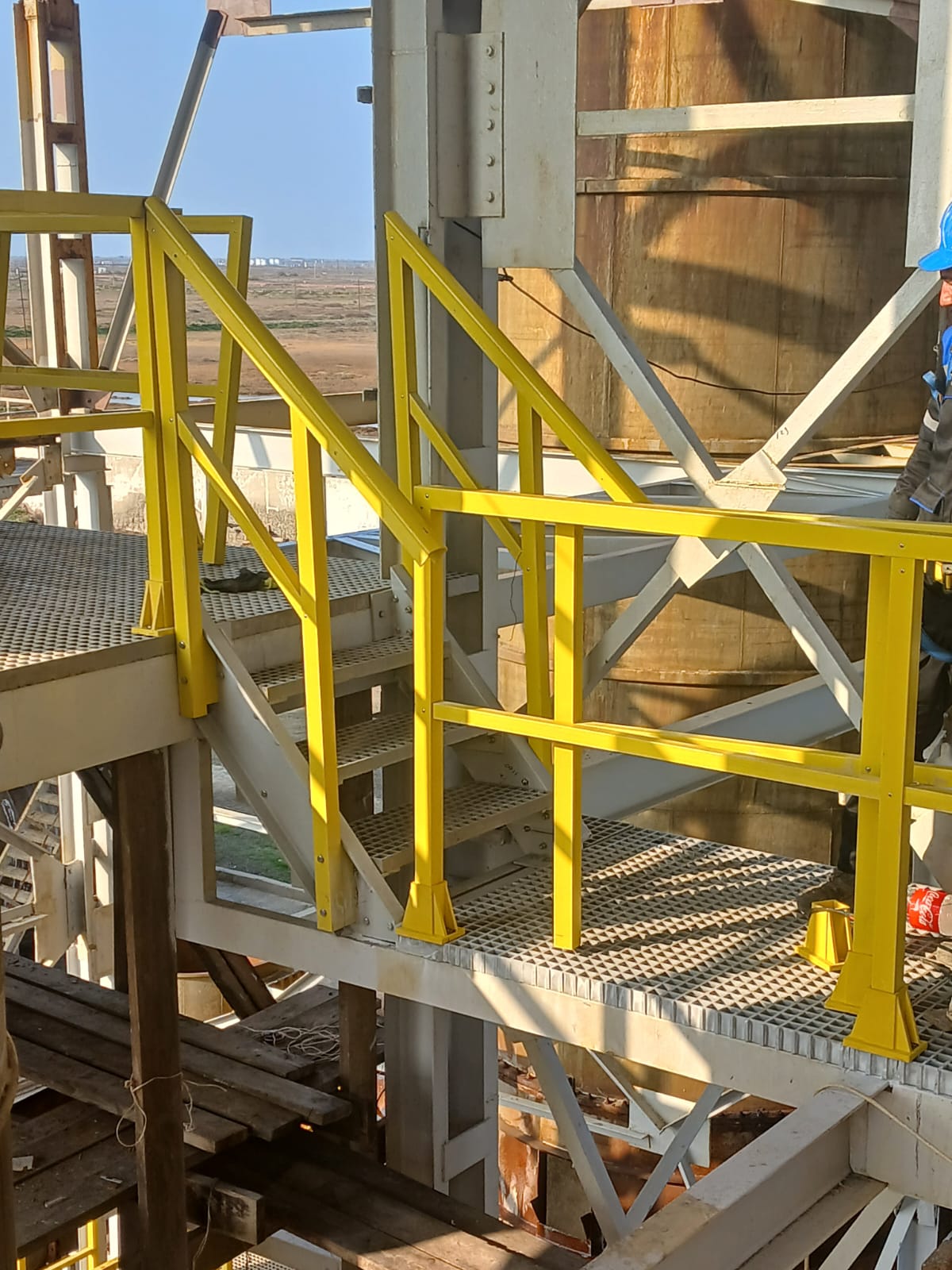
Retrofitting handrails around live pipe racks used to mean shutting down sections, waiting for field welders, and juggling hot work permits. Modular FRP rail kits flip that script. They arrive pre-cut, pre-drilled, and ready to bolt into place with basic hand tools, which means crews can work around existing pipes without sparks or heavy fabrication.
The real time saver is in the fit. Because FRP components are manufactured to tight tolerances, each post, mid-rail, and top rail lines up the first time — no grinding, no shimming, no re-drilling on the fly. One team can often complete a 100-foot run in a single shift, even when the rack is congested with process lines, cable trays, or instrumentation conduits.
Beyond speed, the kits simplify logistics. Everything ships as a labeled package, so you don't need a staging yard full of raw angle and channel. And since FRP is non-conductive and corrosion-resistant, the installed rails don't create new maintenance headaches around electrical or chemical lines. For plants that can't afford downtime, that combination of quick install and long-term durability is hard to beat.
UV-Stabilized Handrail Profiles That Won't Chalk or Fade on Rooftops
Rooftop handrails take a beating from the sun. Standard plastics and even some powder-coated metals start to chalk after a couple of seasons, leaving a dusty white film on hands and ruining the look of the building. The profiles we use are compounded with UV stabilizers that work at the molecular level, not just as a surface coating. That means the color and gloss stay locked in for years, even under continuous exposure on a south-facing rooftop terrace.
We put these profiles through accelerated weathering tests that simulate multi-year sun, rain, and temperature swings. The result is consistently low delta E values, so there is no visible shift from the original shade. In real rooftop installations, from coastal HVAC platforms to urban green roofs, maintenance crews tell us they rarely need to scrub off oxidation or repaint just to keep the railing presentable.
The substrate also matters. By pairing the UV package with impact-modified polymers, the handrail stays tough against hail, tool drops, and thermal expansion without developing microcracks that invite chalking. You get a clean, matte finish that does not glare in bright sunlight and does not fade into that washed-out gray after a few summers.
Deflection Limits and Load Ratings for Mezzanine Perimeter Guarding
Load ratings for perimeter guarding on mezzanines generally follow a pair of baseline values: a 50 pound per linear foot uniform load applied horizontally and a 200 pound concentrated load applied at any point and in any direction on the top rail. These figures cover normal impacts from workers, carts, and minor equipment contact. Where forklift traffic or heavy tool carts operate nearby, project specifications often raise the concentrated load to 300 pounds or more, and the uniform load may be adjusted to reflect the stored energy of a moving object.
Deflection limits are rarely stated as a single number across all installations, but a common benchmark is L/120 or L/180 of the clear span between posts when the top rail is subjected to the specified concentrated load. Some manufacturers also cap total lateral movement at 1 inch regardless of span to reduce visual sag and keep infill panels, mesh, or glass from binding in their frames. Stricter deflection limits can be necessary for guard assemblies that support handrails used as fall arrest tie-off points or where brittle infill materials are installed.
The actual deflection measured in the field depends on post spacing, base plate size, anchor type, and whether the rail is welded or mechanically spliced. A bolted connection may allow slightly more rotation at the post-to-rail joint than a continuous welded rail, so specifying a tighter deflection limit often forces shorter post spacing or stiffer rail sections. Testing a mock-up section under the required loads gives a more reliable indication of performance than relying solely on calculated values, especially when the mezzanine edge condition includes slab recesses, curbs, or embedded channels.
FAQ
FRP combines high strength with light weight, so you get a railing that won't corrode, warp, or spark even when exposed to chemicals, salt water, or constant moisture. Unlike metal, it doesn't need painting or galvanizing to stay intact, and it's naturally non-conductive, which adds a layer of safety around electrical equipment.
Steel typically starts showing rust within a few years in aggressive environments, while FRP is inherently resistant to corrosion from acids, alkalis, and solvents. That means no flaking paint, no pitting, and no structural weakening from rust—common failure points for metal railings.
Most systems come with prefabricated sections and simple splice connections, so a small crew can handle installation without heavy lifting equipment. Since the material is much lighter than steel, you can often cut and fit pieces on-site using basic tools, which saves time during retrofits.
Usually just routine cleaning with soap and water is enough. There's no need to schedule repainting, rust removal, or protective coatings. Occasional inspection for loose fasteners is wise, but the structural integrity doesn't depend on sacrificial layers like galvanized steel does.
Yes, manufacturers can produce bends, stair transitions, and variable angles without compromising strength. The pultrusion process allows for custom profiles, and many fabricators will match existing hole patterns or railing heights to simplify replacement of old metal systems.
Look for compliance with OSHA guardrail requirements, IBC or local building codes, and relevant ASTM standards for fiberglass structural shapes. A reputable supplier should provide load test data and material certifications rather than just claiming 'heavy duty'.
Initial material cost for FRP can be higher than bare steel, but the total cost of ownership usually flips in FRP's favor after a few years. You avoid repeated painting, corrosion repairs, and eventual replacement, not to mention downtime for maintenance in active production areas.
Yes, fiberglass is non-conductive, which reduces the risk of shock if a handrail is installed near power lines, transformers, or control panels. Unlike aluminum or steel, FRP won't create a grounding path or arc hazard during accidental contact.
Conclusion
On chemical plant walkways, pultruded FRP handrails consistently outlast galvanized steel because the glass-reinforced profiles resist corrosion through their entire cross-section, not just at a surface coating. Galvanized steel eventually rusts where the zinc layer is scratched or worn, but FRP keeps its structural integrity even when constantly exposed to aggressive fumes, drips, and standing chemical residues. Choosing the right resin grade for each splash zone is the core material decision—vinyl ester resins stand up to strong acids and alkalis, while isophthalic polyesters handle solvents and less aggressive corrosive agents. In wet bays where footing is treacherous, integrally applied grit coatings on the top rail and mid-rail create a durable, non-slip surface that keeps workers upright even when the walkway is soaked or oily. These coatings are bonded into the resin during pultrusion, so they do not peel away like adhesive tapes or paint.
Modular FRP rail kits simplify retrofits around existing pipe racks because the components are lightweight, pre-drilled, and assemble with basic hand tools, cutting installation time without welding, grinding, or heavy lifting. This approach also reduces disruption to plant operations, a major advantage in congested industrial areas. For rooftop handrail applications, UV-stabilized FRP profiles resist chalking and fading, so the railing maintains its appearance and surface hardness after years of direct sun exposure. When specifying guarding for mezzanine perimeters, engineers must verify deflection limits and load ratings against the required uniformly distributed and concentrated loads. Properly designed FRP systems can meet OSHA and IBC guardrail requirements while providing the stiffness and solid feel that workers expect from perimeter protection.
Contact Us
Contact Person: Nicholas Zhu
Email: [email protected]
Tel/WhatsApp: 18921275456
Website: https://www.sino-grate.com