

Tissue Folding Machine Solutions for Streamlined Production Lines
2026-10-06
Every production manager knows the frustration of watching a high-speed line crawl because the folding station can't keep pace. It's not just about speed—it's about consistency, waste, and the hidden costs of manual adjustments. In this post, we explore how modern tissue folding machines are reshaping throughput, and why teams are turning to DAXIN for solutions that don't just fit the line, but streamline it from the first napkin to the last.
Precision Folds at Full Line Speed
Watching a carton take shape at full production speed used to mean accepting a certain tolerance drift. The fold geometry shifts, the board memory kicks in, and before long you’re chasing micro-adjustments. This line isn’t built that way. The folding section holds its calibration through the entire speed range, so the crease lands exactly where the die score intended—from the first blank to the ten-thousandth.
Instead of relying on operator correction after the fact, the machine reads the blank position in real time and compensates before the fold begins. That subtle timing shift is what keeps long runs stable. Corners seat tightly, glue joints close without bulging, and side seams line up without the usual fight against momentum.
The result feels less like a compromise between speed and accuracy and more like both happening in parallel. Changeovers still happen, but the fold quality doesn’t gradually fall off as the shift wears on. That’s the kind of consistency packaging lines need when downstream equipment has zero patience for rework.
Quick Integration with Existing Equipment
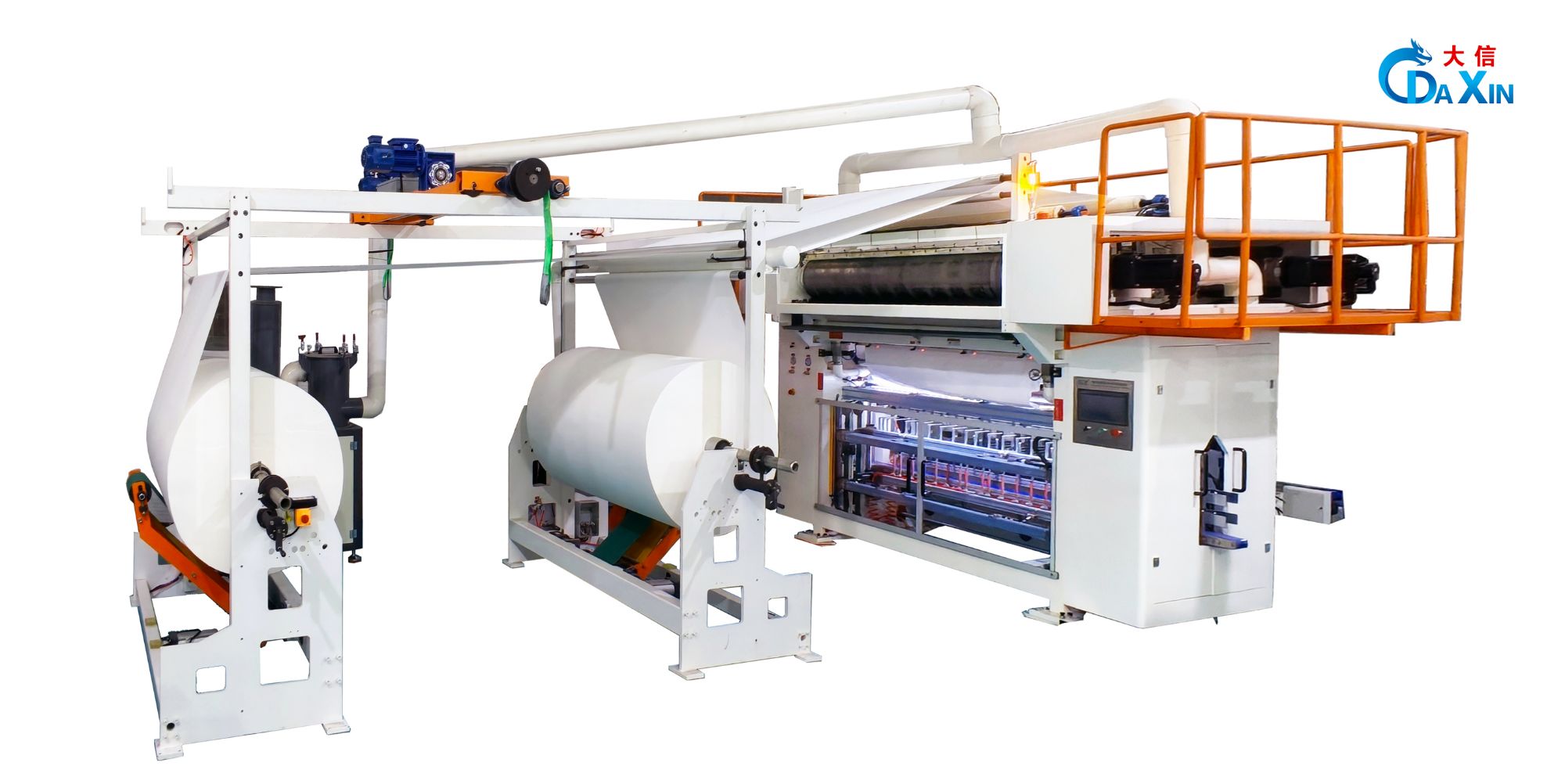
Getting new machinery up and running alongside what you already own shouldn't require a complete overhaul of your floor plan or a crash course in unfamiliar software. Our systems are built to slide into your current setup with minimal friction — standard communication protocols and adaptable mounting options mean you can connect to legacy control panels, existing conveyors, or third-party sensors without building a custom bridge every time.
We've designed the interface to speak the language your operators already understand, so training time drops from weeks to days. Whether you're retrofitting a single station or linking an entire line, the configuration tools let you map inputs and outputs visually, avoiding the usual tangle of adapter cables and middleware. The goal is simple: your team keeps the workflow they trust, and the new equipment quietly becomes part of it.
Field feedback keeps pointing to the same thing — the fastest payback comes from machines that don't demand a dedicated integration engineer. That's why every unit ships with pre-tested profiles for common PLC brands and a diagnostic mode that pinpoints connection issues before they stall production. You don't need to rip out what works; you just plug in what's next.
Flexible Formats for Every Tissue Type
A pocket-sized pack slips easily into a purse or backpack, while a countertop box keeps sheets within arm’s reach at home. For the bathroom, a compact roll tucks neatly onto a standard holder, and a jumbo roll reduces refill trips in busy households. Each shape is built around how and where you actually use the product.
Folded tissues work well in car glove compartments or desk drawers, staying flat until you need one. For workshops and kitchens, perforated rolls let you tear off just the right amount without waste. Even travel kits combine a few folded sheets inside a slim sleeve, giving you a clean option on the go without carrying a bulky box.
From ultra-soft face tissue to sturdy paper towels, every format serves a specific routine. A vertical dispenser fits on a narrow shelf, while a cube box sits low on a coffee table without tipping. By matching the container to the tissue type and the room’s traffic, you get a setup that simply works day after day.
Predictive Maintenance That Prevents Stops
Unexpected equipment failures rarely announce themselves politely. They tend to surface mid-shift, when a bearing has already overheated or a hydraulic line has quietly lost pressure. Predictive maintenance turns that pattern around by reading the subtle signals machines give off long before a breakdown: vibration signatures, thermal drift, tiny changes in current draw. Instead of waiting for a stop, your team gets a heads-up while there is still time to plan the fix around production, not against it.
What makes this approach practical is the shift from calendar-based guesses to condition-based action. A pump that runs hot every Tuesday might be perfectly fine for months, while a fan on the other side of the plant degrades faster than its schedule suggests. By tracking each asset's own baseline and flagging deviations, you stop replacing parts that still have life in them and start catching the ones that are about to quit. The result is fewer surprise stops, less overtime scrambling, and maintenance budgets that go toward actual needs.
The real payoff shows up in how a plant breathes. When operators trust the warnings, they stop running equipment to the breaking point just to hit a shift target. Supervisors can green-light a brief planned pause on a Wednesday afternoon instead of losing a full Friday to an emergency teardown. Over time, the data reveals which machines are chronic troublemakers and which suppliers keep delivering components that fail early. That kind of insight doesn't just prevent one stop; it quietly rewires how the whole operation thinks about reliability.
Automated Inspection for Consistent Quality
In a production line where thousands of parts move every hour, a single missed defect can trigger expensive recalls or rework. Automated inspection addresses this by replacing manual checks with high-speed cameras, laser profilers, and machine learning models that evaluate every unit against the same set of dimensional and surface criteria. The result is a level of consistency that human inspectors, subject to fatigue and subjective judgment, simply cannot sustain across an entire shift.
Rather than relying on a fixed threshold that often flags borderline parts inconsistently, modern systems build a statistical picture of normal variation from thousands of scanned samples. When a measurement drifts outside that learned envelope, the line can be stopped or the part diverted before it reaches downstream assembly. This closed-loop feedback keeps small process shifts from becoming large quality escapes.
The payoff shows up in fewer customer complaints and lower scrap rates, but the deeper change is cultural. Operators stop chasing intermittent defects and start using inspection data to tune cutting speeds, mold temperatures, or torque settings. Over time, the line becomes less dependent on heroic end-of-line sorting and more capable of producing good parts from the first cycle.
Energy-Saving Design for Continuous Runs
Long-duration operations often waste energy through fixed-speed motors, constant heating, and idle equipment left running between cycles. A smarter approach pairs variable frequency drives with load-sensing controls so power draw tracks actual demand instead of peak assumptions. For example, conveyor systems in packaging lines can throttle down during minor gaps without stopping the line, cutting kilowatt-hours without sacrificing throughput.
Thermal processes benefit from staged insulation and heat recovery loops that capture waste from exhaust or cooling circuits. Rather than reheating from ambient each cycle, continuous ovens or dryers can preheat incoming air with outgoing exhaust, trimming gas use by double digits. Adding smart sensors to detect partial loads lets burners modulate rather than cycle on and off, which also extends equipment life.
Scheduling plays an underrated role: grouping similar production runs reduces changeover energy spikes, while automated sleep modes for auxiliary equipment—compressors, dust collectors, hydraulic pumps—prevent hidden standby draw. One textile mill reported a 14% drop in energy per unit after simply syncing start-up sequences so no machine idled more than three minutes before the next stage needed it.
FAQ
The main benefit is consistency at speed. These machines keep fold alignment accurate while running far beyond what manual or semi-automatic setups can manage, which means fewer jams and less waste on long runs.
Many now use tool-free adjustment systems and recipe-driven controls, so operators can switch between different fold types or sheet counts in under ten minutes instead of losing half a shift to mechanical tweaks.
Yes, most current models are designed with adjustable folding rollers and vacuum-assisted feed tables that maintain grip on varied ply counts without requiring separate setups for each product.
Compact vertical or inline configurations work well. Some manufacturers offer folding modules that mount directly above converting equipment, saving floor area while keeping the tissue path short and stable.
Servo drives let each folding station adjust timing independently, so even at very high cycle rates the fold stays precise. It also allows for fine-tuning from a touchscreen, which mechanical cams simply can't match.
Daily cleaning of folding plates and regular lubrication of roller bearings are essential. Also, monitoring wear on vacuum belts and replacing them before they slip prevents most unexpected stoppages.
Usually yes, especially if you choose a modular design with standard communication protocols. Many suppliers offer pre-configured integration kits and can have the new folding station running during a scheduled maintenance window.
Most systems are built for intuitive touchscreen operation, so a day of hands-on training from the supplier often covers daily operation. More advanced functions like recipe creation and troubleshooting can be learned through short refresher sessions.
Conclusion
Modern tissue converting lines face constant pressure to boost output without sacrificing fold accuracy or material compatibility. The folding machines here address that tension directly. High-speed folding heads maintain crisp, repeatable creases even as the line runs at maximum rate, so there is no need to slow down for tricky ply counts or embossed sheets. Because the units use standardized mechanical and electrical interfaces, they connect to older winders, accumulators, and wrappers within hours rather than days, cutting commissioning time and reducing the risk of misalignment. Changeover between bath tissue, kitchen towels, napkins, and industrial wipes is similarly straightforward: tool-less format adjustments and recipe-driven settings let operators switch from one product to another in minutes instead of losing half a shift to manual trials.
Beyond changeover speed, the equipment is built to stay running. Vibration, temperature, and torque sensors feed a predictive maintenance model that flags bearing wear or belt stretch before either causes an unplanned stop. That means maintenance can be scheduled during planned downtimes instead of reacting to a jam at 2 a.m. In parallel, camera-based inspection checks fold geometry, stack height, and edge alignment on every cycle, rejecting off-spec product without stopping the line. The drive system also recovers braking energy and uses variable-speed motors that match output to real demand, so continuous runs draw less power per case. Together these features give tissue producers a way to raise throughput, lower scrap, and avoid the small interruptions that quietly erode line efficiency.
Contact Us
Contact Person: Sam Xie
Email: [email protected]
Tel/WhatsApp: 86-18938538530
Website: https://www.daxin321.com/