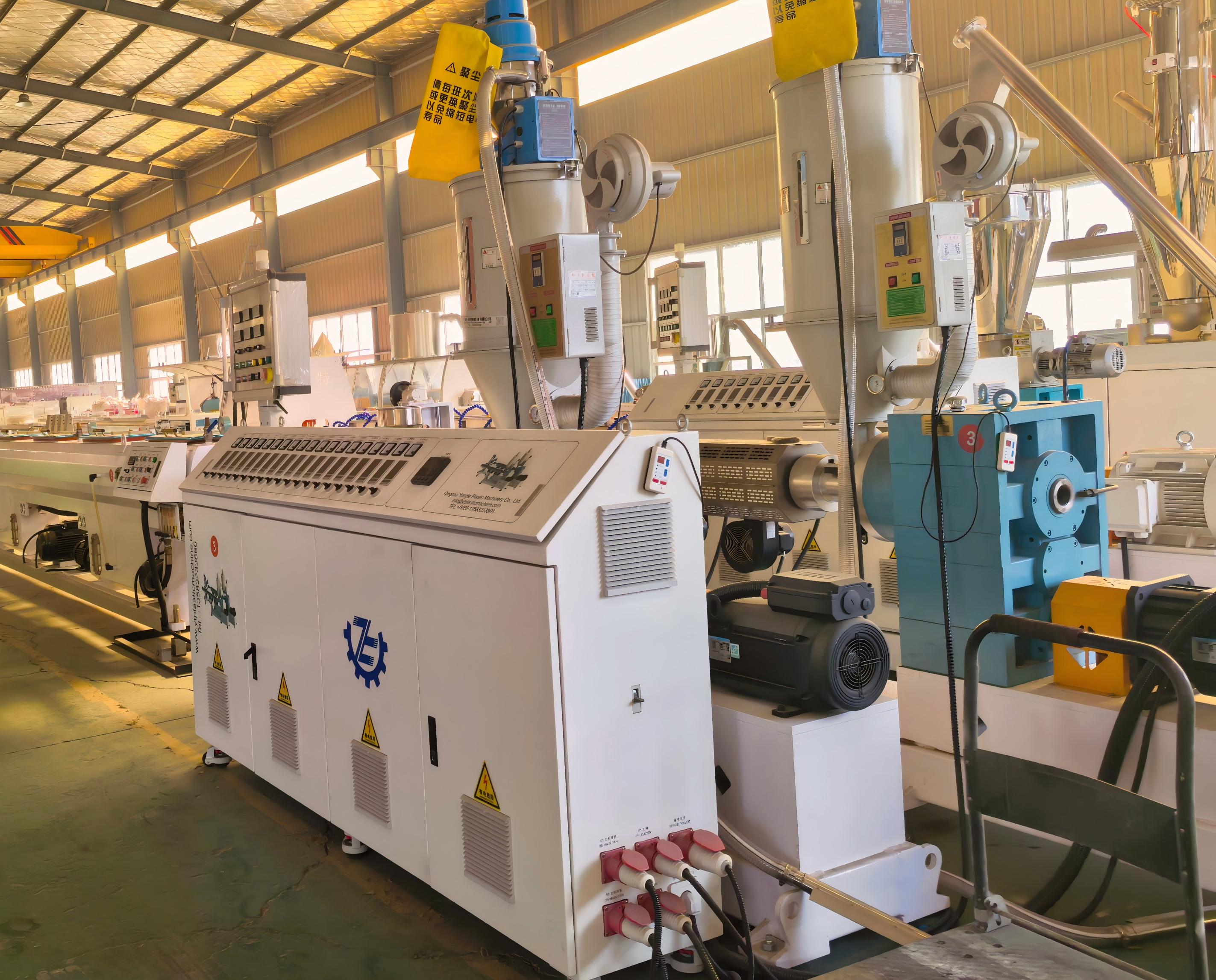

Plastic Lumber Machine Maker Transforms Recycled Waste into Durable Building Products
2026-10-27
Every year, millions of tons of plastic waste end up in landfills and oceans—yet the construction industry is quietly undergoing a shift. Companies like Yongte are turning that problem into a resource, using advanced plastic lumber machinery to convert discarded plastics into long-lasting building materials. But how exactly does this transformation work, and what makes the resulting products stand up to traditional timber? Here's a closer look.
Turning Discarded Bottles and Wrappers into Load-Bearing Planks
What if the plastic litter choking our streets could be pressed into something strong enough to hold up a room? A growing number of small workshops are doing exactly that—melting down bottles, snack wrappers, and film packaging, then compressing the molten mass into thick, rigid boards. The process doesn't rely on separating every resin type. Instead, the mixed plastics are shredded, heated slowly, and fused under high pressure, turning an unruly pile of trash into a dense composite that behaves surprisingly like hardwood.
These planks aren't just for show. Builders have used them for shed floors, temporary partitions, and even low-cost housing frames in humid climates where rot and termites destroy conventional timber. The surface has a mottled, almost terrazzo-like appearance—no two boards are alike—which appeals to designers looking for a story as much as a material. Because the plastic is melted rather than glued, the final plank contains no added binders, just the original pigments and additives from the discarded packaging.
The real trick is controlling the mix. Too much stretchy film and the board sags under load; too many brittle bottle shards and it cracks at the edges. Experienced operators blend roughly three parts rigid plastic to one part flexible wrapper, then add a pinch of sawdust or rice husk to give the composite a bit of tooth for screws. The result is a plank that can span short distances without steel reinforcement, and when it finally wears out, it can be ground down and pressed again into a new board.
Why This Machine Skips the Sorting Step Most Recyclers Dread
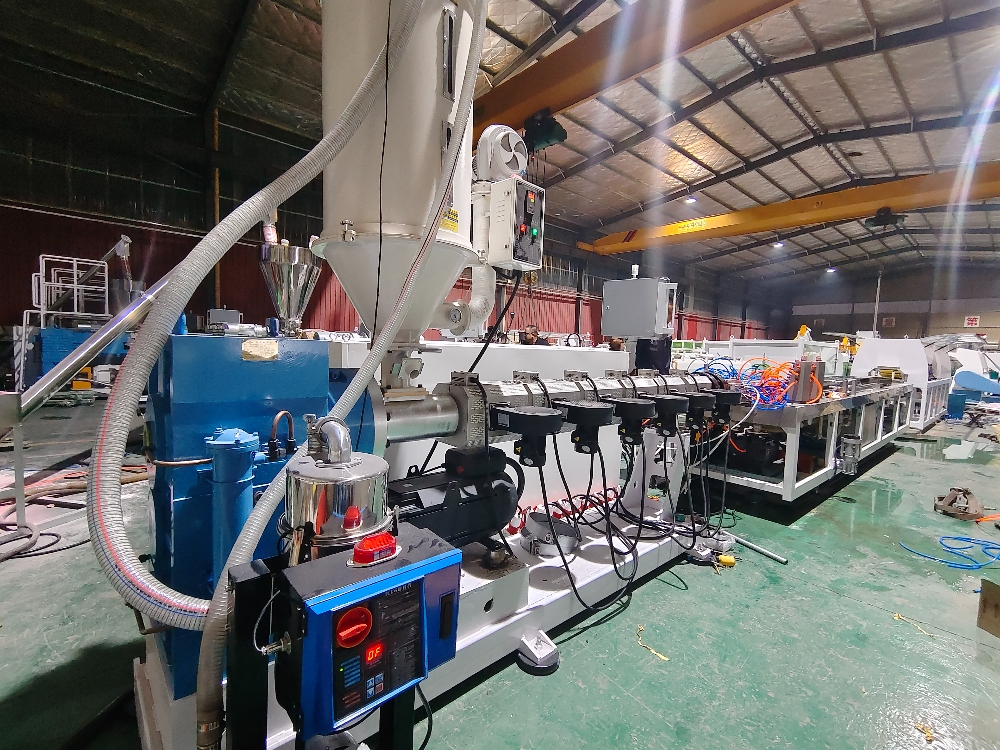
Sorting has long been the bottleneck in recycling operations—labor-intensive, inconsistent, and expensive. This machine sidesteps that entire stage by accepting mixed loads directly from collection trucks. Instead of requiring workers to pull apart plastics, paper, and metals before processing, the system uses a combination of near-infrared sensors, air jets, and magnetic fields to identify and divert materials in real time.
The practical payoff is immediate. Facilities no longer need a dedicated presort line, which means fewer staff injuries from sharp or contaminated items and a sharper drop in residual waste. Because the machine reads each object's chemical signature rather than relying on shape or color alone, it can handle dirty containers and multi-layer packaging that would normally trip up conventional sorters.
Perhaps most striking is how this changes the economics of recycling. By removing the step operators dread most, the machine shrinks turnaround time and lowers the threshold for accepting harder-to-recycle streams. What used to require a room full of pickers now happens inside a single pass, making the entire process quieter, faster, and far less prone to human error.
The Hidden Engineering Behind Weatherproof Plastic Lumber
Most people assume plastic lumber is just melted soda bottles poured into a mold. That could not be further from the truth. The real work happens at the molecular level, where engineers blend high-density polyethylene with glass fibers, mineral fillers, and UV stabilizers in carefully controlled ratios. These additives are not just for show: they fight thermal expansion, which can warp a board by half an inch over a ten-foot span, and they prevent the surface from turning chalky after a single summer. The extrusion line runs at a precise temperature band, often within a five-degree window, so the polymer chains align without becoming brittle. Get it slightly wrong and the board either sags under its own weight or snaps when a contractor drives a screw too close to the edge.
Another layer of engineering hides in the cross-section. Solid boards are rare because they are heavy and expensive. Instead, manufacturers use a foamed core wrapped in a dense outer skin, a bit like a composite baseball bat. The skin carries the load and resists scratches, while the core cuts weight and material cost. But that core is not just empty air; it is a closed-cell structure that traps gas bubbles, which gives the lumber its spring-back behavior after impact. It also creates a thermal break, so the board does not act like a heat sink on a hot deck. The tooling for these profiles is machined to tolerances measured in thousandths of an inch, and the cooling tanks often run counter-flow water to quench the board evenly from outside in, preventing internal stress that leads to hidden cracks.
Finally, there is the fastening system, which is part of the lumber itself rather than an afterthought. Hidden clips slide into grooves routed along the board edges, allowing the material to expand and contract lengthwise without popping screws or splitting. Those grooves are not simple slots; they have undercut angles and drainage channels so water does not pool and freeze. Some products even integrate a traction texture on the top surface that is embossed during extrusion, not painted on. That texture wears down over a decade but keeps its grip because it is the same material all the way through. The result is a product that looks like wood, feels solid, and survives environments where real timber would rot or splinter in three years.
Builders Compare Costs: Recycled Lumber vs. Pressure-Treated Wood
When a framing crew sits down with a budget sheet, the conversation often drifts toward two very different boards: recycled lumber pulled from demolished barns and warehouses, versus the familiar green-tinged pressure-treated stock stacked at the lumberyard. Recycled lumber can carry a lower upfront price per board foot if you know where to source it, but that number rarely tells the whole story. Nail-pulling, metal detection, and trimming away cracked ends eat into labor hours fast. On the flip side, pressure-treated wood arrives straight and predictable, but recent price swings in chemical treatments and southern yellow pine have made even the most basic deck joist a line item worth debating.
Durability takes the argument in a different direction. Old-growth recycled lumber often comes from trees that grew slowly for a century, giving it tight rings and natural rot resistance that modern farmed pine can't match. A reclaimed beam might shrug off moisture for another fifty years. Yet pressure-treated wood is engineered for ground contact and insect exposure, with warranties that builders can hand to a client without hesitation. The real cost difference shows up three or four years down the road, when the recycled board that looked perfect starts cupping in the sun, or when the pressure-treated railing needs a fresh coat of stain to hide that chemical gray.
For most builders, the decision comes down to the project's personality. A rustic porch or a mountain cabin begs for the character of recycled lumber, even if every board demands a bit of wrestling. A structural deck or a fence line in wet soil leans toward pressure-treated, because consistency and code approval matter more than charm. Smart builders don't treat this as a one-size-fits-all comparison. They keep a supplier of reclaimed wood on speed dial for the right jobs, and they watch pressure-treated prices like a hawk when the season shifts. In the end, the cheaper board isn't always the one with the smaller sticker price.
One Factory’s Waste Becomes Another Town’s Boardwalk
In a small industrial district, slabs of scrap plastic and rubber once destined for a landfill have started a second life sixty miles away. A seaside town, short on funds for a new promenade, agreed to take the factory's discarded composite material after a local engineer noticed it could be cut, stacked, and locked into sturdy walking planks. The result is a boardwalk that doesn't look like recycled waste at all—just weathered gray boards with a subtle grain, salt-resistant and slightly springy underfoot.
The arrangement began as an experiment. The factory paid a small fee to have its unusable extrusion runs hauled off, while the town covered only transport and labor. Over the course of a year, enough material arrived to replace nearly half a mile of rotting timber. Workers on site learned to sort the batches by density, rejecting anything brittle or warped. What surprised them most was the durability: after two winters of storms and foot traffic, the repurposed planks showed fewer cracks than the treated wood they replaced.
Residents rarely think about where the boards under their feet came from. Some notice the faint printed codes on the underside, leftovers from the factory floor. A few complained at first that the material felt too uniform, too smooth for a coastal walk. But after the local fishing fleet started hosing fish scales off the same planks every morning, the boardwalk simply became part of the town's routine—an ordinary stretch of wood and plastic that happened to start out as someone else's industrial leftovers.
Maintenance-Free Boards That Survive Salt, Moisture, and Pests
Coastal properties punish ordinary building materials. Salt-laden air corrodes metal fasteners, moisture seeps into porous cores, and termites treat exposed wood like an invitation. These boards reverse that equation. Their closed-cell structure sheds water on contact, while the high-density polymer blend leaves nothing for insects to chew on or digest. Even after years of direct salt spray, there is no pitting, no swelling, no quiet rot hiding beneath the surface.
The real advantage shows up in the places builders tend to ignore. End cuts, routed edges, and fastener holes stay just as resistant as the board faces because the protection is not a coating—it runs through the entire thickness. A dropped cooler, a dragged grill, a season of sandy feet: none of it opens a path for moisture or pests to get a foothold.
Maintenance shrinks to a rinse. There is no sealing schedule, no pesticide treatment, no replacement board waiting on a future weekend. For waterfront decks, garden borders, and docks that face brackish water, that means the structure keeps its looks and its strength without demanding anything back.
FAQ
It tolerates a fair amount of labels, glue, and food residue. You just need to knock off large debris and remove metal parts, because those can damage the screw and barrel.
They typically outlast treated pine by a wide margin, especially in wet climates. No rot, no termite damage, and no annual sealing or staining is needed.
One or two trained operators can run the line after a few days of practice. The controls are straightforward, and most issues come down to keeping the feed rate steady.
Mixed rigid and film plastics such as milk jugs, detergent bottles, pallet wrap, and grocery bags all work well. Blending them gives the final board a good balance of stiffness and flexibility.
People mostly produce decking, fence posts, garden edging, and outdoor furniture parts. Because the material handles moisture well, it also shows up in boardwalks and agricultural structures.
Yes, each production run diverts tons of plastic that would otherwise sit in a dump for hundreds of years. Since the resulting boards replace timber, it also lowers demand for logging.
Weekly care is mostly cleaning the die area, checking the screen changer, and greasing a few bearings. If you stay on top of those tasks, major breakdowns are rare.
The upfront material cost can be higher than cheap pine, but you save on replacements, paint, and labor over the life of the project. For marine or ground-contact uses, it's usually the cheaper option within a few years.
Conclusion
The machine at the heart of this shift takes unsorted loads of discarded bottles, film wrap, and crinkled packaging, then turns them into dense, load-bearing planks without asking operators to separate polymers by hand. That missing sorting step is deliberate: the extruder and filtration system are tuned to handle mixed melts, so a town’s messy recycling stream becomes a structural board instead of a sorting-line headache. Builders who compare these boards with pressure-treated wood quickly notice that the recycled option carries no splintering risk, no chemical leaching, and no annual staining routine. In coastal or wet environments, the planks resist salt, standing moisture, and termite damage with zero upkeep, which shifts the cost math in their favor even when the initial price per board runs slightly higher.
One factory’s steady supply of local scrap has already been converted into a public boardwalk in a neighboring town, where it withstands foot traffic, tides, and full sun without warping or fading. The hidden engineering involves careful control of melt temperature, cooling rate, and polymer compatibility so different plastics bond into a stable composite rather than separating into weak layers. Additives block UV degradation and balance thermal expansion, giving the lumber a lifelike feel underfoot while keeping dimensions stable through freeze-thaw cycles. Because the boards never rot or require preservatives, they are replacing wood in marine decks, retaining walls, and wetland walkways where traditional timber fails within a few seasons. For builders and municipalities, that turns a local waste problem into durable infrastructure with a lower total cost of ownership.
Contact Us
Contact Person: Ms Qin
Email: [email protected]
Tel/WhatsApp: 8613583233866
Website: https://www.yongteplast.com