

NS3304 Seamless Pipe Manufacturer Delivers Corrosion-Resistant Alloy Tubing
2026-11-02
Corrosion never sleeps, but the right alloy can keep it at bay for decades. As a leading NS3304 seamless pipe manufacturer, JILAIDA has mastered the art of turning nickel-chromium-molybdenum into tubing that thrives where ordinary metals crumble. Whether it's aggressive chemical processing, sour gas wells, or marine exhaust systems, our seamless pipes deliver the kind of reliability that engineers quietly count on—and spec sheets rarely capture. In this post, we pull back the curtain on how we produce corrosion-resistant alloy tubing that meets stringent specs without compromising lead times, and why choosing the right manufacturer matters more than the alloy itself.
Why NS3304 Stands Up to Acidic and Salty Conditions
NS3304 owes its acid resistance to a carefully balanced nickel-chromium-molybdenum chemistry. Molybdenum and tungsten work together to block attack from reducing acids like hydrochloric and sulfuric, while chromium builds a stable oxide layer that holds up under oxidizing conditions. Low carbon content keeps carbide precipitation from weakening grain boundaries during welding, which is why the alloy stays tough in aggressive chemical streams.
In salty environments, the story shifts to pitting and crevice corrosion. The high molybdenum content pushes the alloy's pitting resistance well beyond that of 316L or even 2205 duplex stainless. Chloride ions struggle to break through the passive film, and any small scratch repassivates quickly instead of turning into a deep pit. This self-healing behavior is what allows NS3304 to shrug off seawater, brine, and chloride-laden process fluids.
Field experience backs this up: scrubber systems, acid pickling lines, and marine exhaust components made from NS3304 keep running long after conventional stainless parts have failed. Where hot acids and salt spray overlap, the alloy does not need protective coatings or liners, which simplifies maintenance and cuts downtime in chemical plants and offshore installations.
Seamless Forming: How We Eliminate the Usual Weld Seam Risks
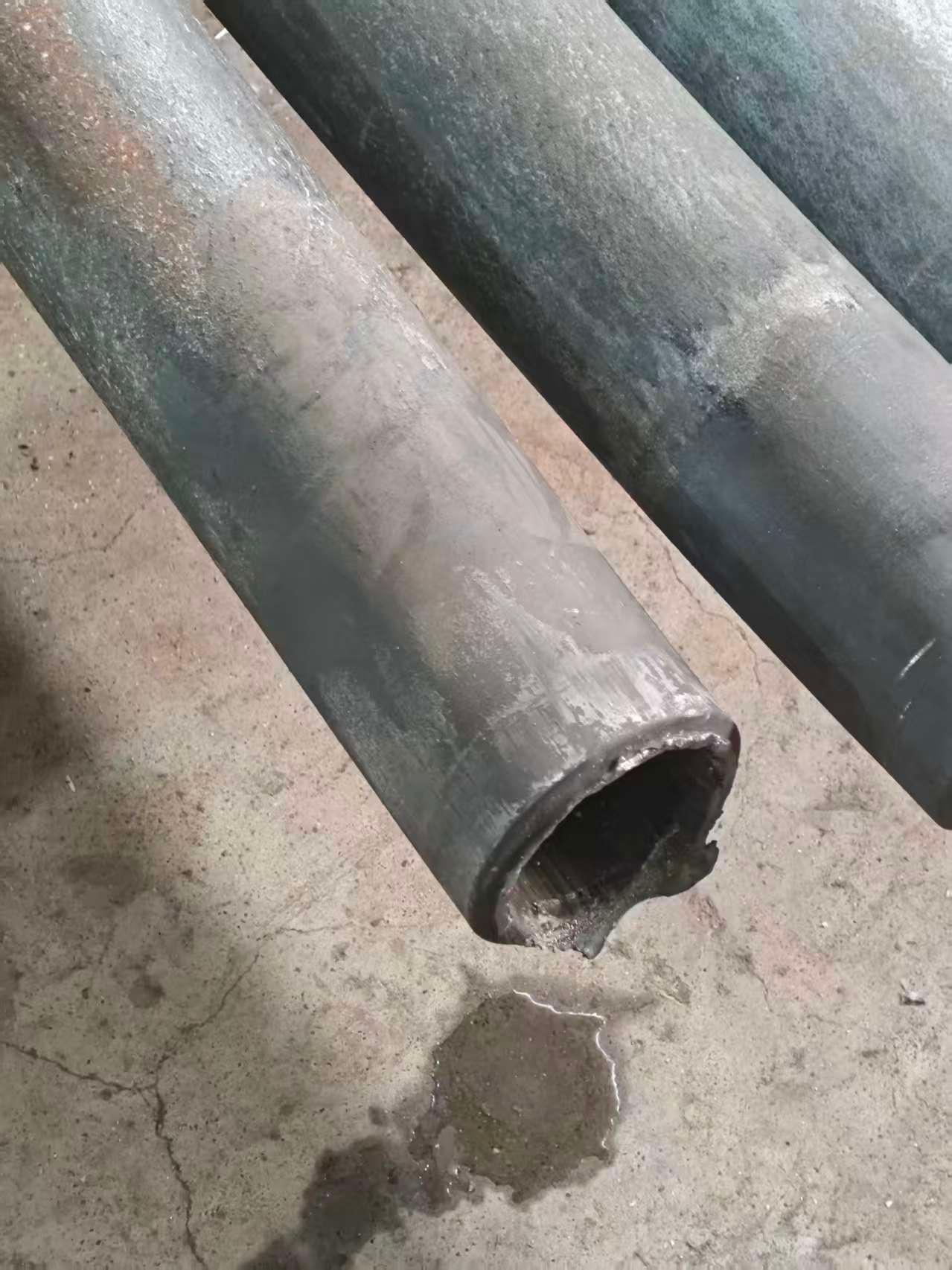
Conventional welded assemblies always carry a weak point at the fusion line. By shifting to a seamless forming process, we let the metal flow as a single continuous body rather than joining two separate pieces. The result is a component where grain structure follows the contours of the part, so stress concentrations at a weld toe simply never appear.
Heat input is another variable we remove entirely. Welding creates a heat-affected zone with unpredictable hardness and residual stress; seamless forming avoids that thermal cycle altogether. Cold working or controlled hot forming shapes the material without melting it, which means the mechanical properties stay consistent from the outer surface to the core.
The practical payoff shows up in fatigue life and leak-tight integrity. Without a seam, there is no starting point for cracks, no porosity to seal, and no post-weld grinding or inspection. For pressure vessels, drive shafts, or structural nodes, that translates into fewer hidden failure modes and a part that behaves as one piece from day one.
Holding Tight Tolerances Under Extreme Heat and Pressure
Maintaining dimensional accuracy when temperatures climb past 800°C and pressures exceed 30,000 psi isn't just about picking a heat-resistant alloy. It's about understanding how every grain boundary, every micro-scale phase change, and every thermal expansion coefficient interacts with the tooling itself. Even a 0.02 mm drift can turn a precision component into scrap, which is why seasoned machinists spend as much time mapping thermal growth as they do dialing in the cut.
One overlooked trick is pre-conditioning the workpiece and fixture as a single thermal unit. Instead of fighting expansion with aggressive cooling, which can introduce stress fractures, you let the entire setup reach a stable soak temperature before taking finish passes. Combined with in-process probing that tracks real-time displacement, this lets you hold tolerances that standard CNC compensation tables would never predict.
Tool life under these conditions follows a different set of rules too. Coatings that work fine at 400°C can delaminate or oxidize rapidly when the cutting zone stays hot for minutes at a time. The practical solution is often a staged approach: rough aggressively while the part is still relatively cool, then switch to a low-wear ceramic or CBN insert for the final few tenths of material removal, accepting that the last pass might take three times longer than the first.
Chemical Plants, Offshore Rigs, and Other Places This Alloy Calls Home
Few materials get handed a tougher assignment than the one waiting inside a chemical plant. Pipes, valves, and reactor vessels here sit in constant contact with acids, chlorides, and temperature swings that would chew through ordinary steel in months. This alloy holds up because it pairs a dense chromium-oxide film with molybdenum for pitting resistance, which means maintenance crews spend less time chasing leaks and more time keeping production on schedule.
Offshore rigs push the same alloy into even harsher territory. Salt spray, wave shock, and the occasional sour gas stream create a corrosion cocktail that leaves no room for weak links. You will find the alloy in seawater lift pumps, flare booms, and subsea manifolds, where a failure is not just costly but dangerous. It shrugs off chloride stress cracking well enough that inspectors often pass over these components during routine checks.
Beyond the headline locations, the material shows up in pulp mills, desalination plants, and even pharmaceutical clean rooms, anywhere that process fluids turn hostile. Its real advantage is predictability: engineers can spec it once and trust that it will behave the same way in year five as it did on day one.
Every Heat Number Tracked and Tested Before It Leaves the Mill
Each melt gets its own file before it ever cools into a usable shape. Samples are pulled from the same pour, not a separate batch, and they go through chemical analysis, tensile testing, and impact checks that match the intended application. If one heat doesn't meet the specified range, the entire lot is pulled aside and flagged before it has a chance to move downstream.
That traceability doesn't stop at the test report. The heat number is stamped on the product, recorded in the mill's internal system, and attached to every document that leaves with the shipment. When a customer calls with a question months later, the mill can pull up the exact composition and mechanical properties for that specific heat instead of guessing from a general data sheet.
This isn't a spot-check process. Every single heat is held to the same standard, and nothing leaves the mill until the lab signs off on the numbers. It is a slower way to work, but it removes the uncertainty that shows up when material from multiple heats gets mixed or when only a handful of samples are tested to represent a much larger run.
Custom Diameters and Wall Thicknesses Without the Long Wait
Getting tubing in a non-standard size usually means waiting weeks for a mill run. Our approach skips that bottleneck. We stock an unusually broad range of blank diameters and wall combinations, then machine them to your exact spec in-house. Whether you need a 23.7 mm OD with a 3.2 mm wall or something even more obscure, we can ship within days instead of months.
The real advantage is how we handle wall thickness. Rather than forcing you to accept the next standard gauge, we can turn down the outside or bore the inside to hit the number on your print. This also lets you fine-tune weight, pressure rating, or fit without redesigning your assembly around someone else's catalog.
Most custom diameter orders leave our floor in three to five business days. If you have a drawing, send it over before noon and we'll confirm the same day whether it's feasible. No special tooling charges for common adjustments, and no long queue—just the dimensions you need, ready when you are.
FAQ
NS3304 combines nickel, chromium, and molybdenum to resist pitting, crevice corrosion, and stress corrosion cracking. The seamless structure eliminates weld seams that often become weak points in highly acidic or chloride-bearing media, so the tubing holds up longer in harsh process streams.
Producing NS3304 as seamless pipe involves hot extrusion or cold drawing followed by solution annealing. This refines the grain structure and removes residual stress, which improves dimensional consistency and preserves the alloy's corrosion resistance better than welded alternatives in demanding service.
Chemical processing, pharmaceutical manufacturing, pollution control, and marine engineering often specify NS3304 seamless pipe. These sectors need tubing that can handle hot acids, flue gas desulfurization slurries, or seawater without premature failure.
Yes, NS3304 performs well across a range of redox environments because its balanced alloy content resists attack from oxidizing salts like ferric chloride and from reducing acids such as hydrochloric or sulfuric acid at moderate temperatures. This versatility reduces the need to switch materials between process stages.
A dependable manufacturer should provide mill test reports showing chemical composition, mechanical properties, and results from hydrostatic or eddy current testing. Additional checks like ultrasonic inspection, positive material identification, and intergranular corrosion testing per ASTM G28 give extra confidence for critical applications.
Standard 316 stainless steel is vulnerable to pitting and crevice corrosion in concentrated chlorides, while NS3304 contains substantially more molybdenum and nickel. That difference lets NS3304 seamless pipe survive in brackish water, seawater-cooled heat exchangers, and bleach plant environments where 316 would fail quickly.
Manufacturers usually offer cold-drawn or hot-finished seamless tubes from roughly 6 mm to 219 mm outside diameter with wall thicknesses from 1 mm to 30 mm. Custom lengths, plain or beveled ends, and pickled or bright annealed surface finishes are commonly available.
Seamless pipe has no longitudinal weld seam, which removes a potential path for preferential corrosion or metallurgical defects. In high-pressure and high-temperature duties, this uniformity gives more predictable burst strength and fatigue resistance, making it the safer choice for critical process lines.
Conclusion
NS3304 thrives where lesser alloys fail. Its nickel-chromium-molybdenum chemistry shrugs off hydrochloric acid, seawater chloride attack, and sour gas exposure that would pit standard stainless within months. By hot-extruding and cold-finishing every tube, we avoid the longitudinal or spiral weld zone that often becomes the first failure point in aggressive service. The result is a uniform grain structure and dimensional stability—wall thickness held to ±0.05 mm and ovality below 1%—even when the line runs at 600°C and 40 MPa. This matters because in a packed distillation column or a subsea manifold, a few microns of drift can mean a replaced spool or an unplanned shutdown.
The alloy earns its keep in sulfuric acid alkylation units, chlor-alkali evaporators, offshore produced-water reinjection, and geothermal brine loops. Each heat number gets ladle analysis, ultrasonic and eddy-current testing, hydrostatic proof at 1.5 times design pressure, and a final PMI check before it leaves the mill—so the paperwork matches the metal, not just the order. If your project needs 3/4-inch schedule 10 or 12-inch schedule 160, we cut and finish from hollows already in stock rather than waiting on a mill run. Typical lead time for non-standard sizes is under three weeks, and we can ship small-batch trial quantities without penalty.
Contact Us
Contact Person: Chenji Li
Email: 521 Zhonghui Road, Huishan Economic Development Zone
Tel/WhatsApp: +86 83112233
Website: https://www.jldnickelalloy.com/