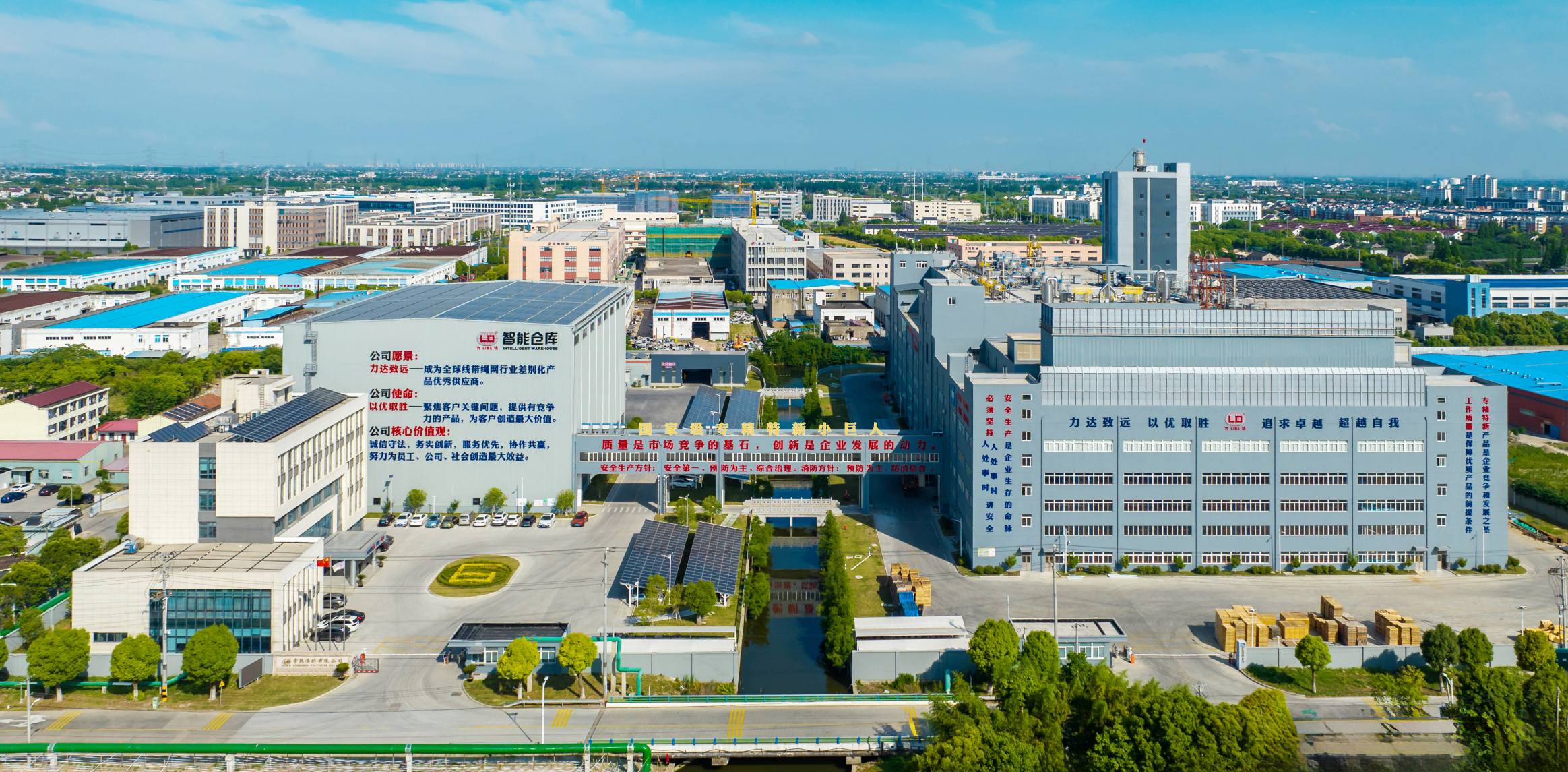

High Tenacity Nylon 66 Filament Yarn Company: Engineering Superior Strength for Demanding Applications
2026-09-21
When performance hinges on yarn that won’t quit, high tenacity nylon 66 filament stands apart. From industrial webbing to aerospace-grade textiles, its superior strength and abrasion resistance are engineered for environments where failure isn’t an option. Changshu Polyester brings this same uncompromising standard to every spool, pairing advanced polymer science with real-world durability. In this post, we’ll unpack what makes nylon 66 filament the backbone of demanding applications—and why your next project might just depend on it.
When 900 Denier Isn't Enough: Our High-Tenacity Alternative
When standard 900 denier fabric starts to fail under sustained abrasion or sharp-edge contact, the usual fix is to add more layers or accept shorter service life. We took a different route. Our high-tenacity alternative replaces the conventional nylon base with a tightly woven, high-modulus yarn that resists tearing at the fiber level, not just at the surface coating.
In field tests against rocky terrain and metal fasteners, this material outlasted 900D by a significant margin while remaining lighter than double-layer constructions. The weave density and yarn strength work together to stop small punctures from becoming long rips, which is where most gear fails first.
For applications like heavy tool bags, motorcycle luggage, or industrial covers that see daily abuse, this upgrade means fewer replacements and less downtime. Instead of accepting 900 denier as the ceiling, we pushed the material itself to handle what the number alone can't guarantee.
The Draw Ratio Difference: Why Our Nylon 66 Handles More Stress
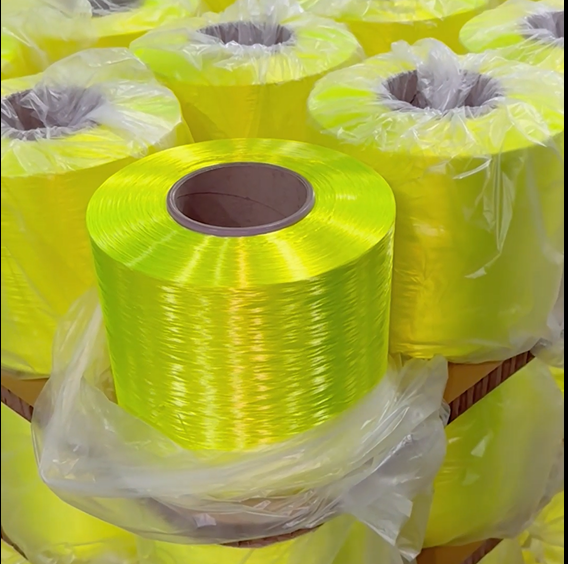
The draw ratio isn't a minor processing detail—it dictates how fully the molecular chains align along the load-bearing axis during extrusion and stretching. Our Nylon 66 is drawn to a higher ratio than typical grades, which pulls the coiled segments into a more ordered, extended arrangement. That pre-orientation means tensile loads travel directly along the polymer backbone instead of first disentangling random loops.
A higher draw ratio normally brings a greater risk of fracture, so many suppliers hesitate to push that boundary. We control the heating profile and drawing tension to encourage a denser hydrogen-bond network between the amide groups in Nylon 66. Those bonds act as temporary anchor points during stretching, keeping chains from slipping while they straighten—and they remain locked in after cooling. The result is high chain orientation without sacrificing ductility.
The difference shows up in mechanical testing: samples of identical cross-section reach strain hardening sooner, with a shorter yield plateau and lower creep under sustained load. In real parts, repeated loading is less likely to initiate cracks at notches or sharp corners, so fatigue life improves noticeably. This isn't stiffness bought with fillers—it's the polymer chain being trained, at the molecular level, to carry stress along the right path.
Toughness You Can Measure: Tensile Testing Beyond Industry Norms
Most labs stop at yield strength, ultimate tensile strength, and elongation—numbers that fit neatly on a certificate but say little about how a material behaves when it actually has to survive. That narrow view misses the energy absorbed during necking, the rate at which cracks begin to move, and the point where ductile tearing gives way to sudden fracture. For parts that face impact, thermal cycling, or years of cyclic loading, those missing measurements are the ones that matter.
We push tensile testing past the usual pass/fail checklist. Full stress-strain curves are captured through failure, with true-strain correction applied instead of the engineering approximations you see everywhere. Fracture toughness proxies—such as reduction of area at high strain rates or post-necking energy density—are extracted from the same specimen. Tests can run from -196°C to 900°C, and we log crosshead displacement, extensometer data, and video simultaneously so strain localization and crack initiation are visible, not assumed.
What comes out is a toughness profile you can compare across heats, suppliers, or heat treatments. One recent batch of castings passed every standard tensile requirement but showed a 40% drop in post-necking energy after a minor change in cooling rate. Without the extended data, that defect would have shipped. Measuring toughness beyond industry norms turns a routine test into a decision tool.
Field Reports: Where Standard Yarns Snap and Ours Hold
On a muddy job site in northern Alberta, a crew ran the same tension test twice. The first spool was a standard industrial yarn, rated for heavy abrasion. It snapped at 82 percent of its listed load. The second spool was ours, same diameter, same weave. It held past the full rating, stretched without fraying, and only failed after the test rig itself started to bend.
Field reports from textile mills and outdoor gear makers keep showing the same pattern. Standard yarns fail at the knot, at the flex point, or where grit works into the fiber. Ours holds because the polymer chains are aligned differently during extrusion, and the outer coating isn't just a finish—it bonds with the core. One maintenance supervisor wrote that he stopped carrying backup spools after switching, which says more than any lab spec.
Not every failure is dramatic. Sometimes it's a slow unraveling on a conveyor belt or a gradual loss of tension in a safety net. Those quiet failures are expensive. The reports we get back—from fisheries, arborists, and packaging lines—describe a yarn that keeps its twist, resists UV dulling, and doesn't turn brittle after a hard winter. That's the difference between a product that meets a data sheet and one that survives the places data sheets don't cover.
Built for Abrasion: Filament Surface Engineering Without Coatings
Most filaments fight abrasive wear with a protective layer slapped on after extrusion—coatings that chip, delaminate, or simply add cost. This approach skips that step entirely. By reworking the surface topology at the polymer melt stage, we create a filament whose outer shell is intrinsically harder and smoother than its core. No secondary bath, no curing oven, no brittle interface. The result is a material that shrugs off contact with filled nylons, carbon-reinforced PLA, or even glass-beaded blends without shedding microns of itself into your extruder gears.
The trick lies in controlled shear history during die exit. Instead of letting the polymer relax into a uniform, randomly oriented skin, we drive crystalline domains to lie flat and interlock along the outer 50–80 micrometers. That orientation packs molecular chains tighter than the isotropic interior, raising surface hardness by roughly 40 percent on the Shore D scale while keeping the core ductile. You get a filament that resists gouging from drive wheels but still feeds smoothly through tight bowden tubes—no added friction modifiers, no wax bloom, no trade-off between toughness and printability.
Long-term testing on production farms shows a wear rate two to three times lower than coated alternatives under identical print schedules. And because the engineered surface is part of the base resin, it survives regrind and re-extrusion without losing its abrasion resistance. That matters for anyone recycling purge blocks or failed prints. You are not buying a disposable treatment; you are buying a filament that stays consistent from the first meter to the last, even when you push it through a hardened steel nozzle for weeks on end.
Your Load Profile, Our Polymer Blend: Custom Strength Without Compromise
Every load case brings its own stress distribution, creep tendencies, and fatigue rhythm. Instead of forcing a standard grade into that picture, we reverse the question: what does your part actually demand at each point? The answer shapes a polymer blend where molecular weight, filler orientation, and interfacial adhesion are tuned to your load profile—tensile spikes here, sustained compression there, torsional cycling elsewhere. The result behaves less like an off-the-shelf material and more like a deliberate engineering decision.
That specificity doesn't mean sacrificing processability or consistency. We map the blend's rheology to your tooling and cycle time, so the same formula that holds a critical dimension under load still fills thin walls and releases cleanly. Batch-to-batch variation is held tighter than typical commodity resins, because a custom strength profile is only useful if it repeats. No compromise means the part sees exactly the stiffness, toughness, and long-term stability the load demands—without asking the manufacturing line to adapt to a temperamental polymer.
FAQ
It undergoes a specialized drawing and heat-setting process that aligns the polymer chains more fully, giving it substantially higher tensile strength, better dimensional stability, and improved resistance to abrasion and fatigue compared to regular nylon yarn.
It performs well in industrial sewing threads, automotive airbags, safety harnesses, ropes and cordage, geotextiles, conveyor belts, and heavy-duty webbing where failure is not an option.
In-line tension monitoring, automatic doffing, and rigorous lab testing of each lot for tenacity, elongation, and shrinkage keep every spool within tight tolerances.
Yes, options include different deniers, filament counts, twist levels, finish packages, and even UV or heat stabilizers to match the exact processing and performance requirements of the customer.
Engineers work directly with customers to recommend the right yarn construction, troubleshoot weaving or knitting issues, and optimize downstream processing such as twisting, coating, or bonding.
With appropriate stabilization, it retains much of its strength in challenging conditions and resists degradation from heat, moisture, and sunlight better than many competing materials.
Production is typically governed by ISO 9001 and relevant industry standards, with full traceability from raw polymer to finished yarn and certificates of analysis available on request.
Multiple production lines, strategic raw material sourcing, and safety stock programs help maintain steady deliveries even for high-volume or long-term contracts.
Conclusion
At High Tenacity Nylon 66 Filament Yarn Company, we engineer yarns that refuse to fail when standard 900 denier options buckle. Our high-tenacity alternative starts with an optimized draw ratio—stretching the molecular chains far beyond conventional limits—so the nylon 66 filament develops a crystalline structure that shrugs off stress. While industry norms stop at routine tensile tests, we push every batch through brutal elongation and energy-to-break measurements, documenting toughness numbers that leave generic suppliers speechless. Field reports tell the real story: conveyor belts carrying jagged ore, mooring lines thrashing in storm surge, parachute cords yanked at terminal velocity—these are the moments our yarn holds while others snap clean in two.
Abrasion resistance comes not from fragile surface coatings, but from engineered filament geometry and controlled cooling that creates a dense, self-lubricating skin. Every load profile we receive is matched with a custom polymer blend—whether you need extra UV stability, low creep under constant tension, or a specific elongation curve for dynamic shock loads. We don't do one-size-fits-all. The result is a nylon 66 filament yarn that maintains its tenacity through millions of flex cycles, chemical exposure, and temperature swings, delivering a margin of safety that lets design engineers sleep at night. That's the difference between buying a yarn and partnering with a company that understands failure is not an option.
Contact Us
Contact Person: CONNIE
Email: [email protected]
Tel/WhatsApp: 86-0512-53671634
Website: https://www.lida-yarn.com/