

China Refined Montana Wax Manufacturer: Your Trusted Global Supplier
2026-09-26
Sourcing refined Montana wax that consistently meets global standards isn't a simple checkbox exercise. Every batch tells a story of purity, filtration, and trust. At the heart of that story is XUSHI, a China-based manufacturer that has quietly redefined what buyers should expect from a wax supplier. If you've ever wondered why some waxes outperform others under pressure, the answer often starts with who made it—and how.
The Real Difference in Our Refined Montana Wax
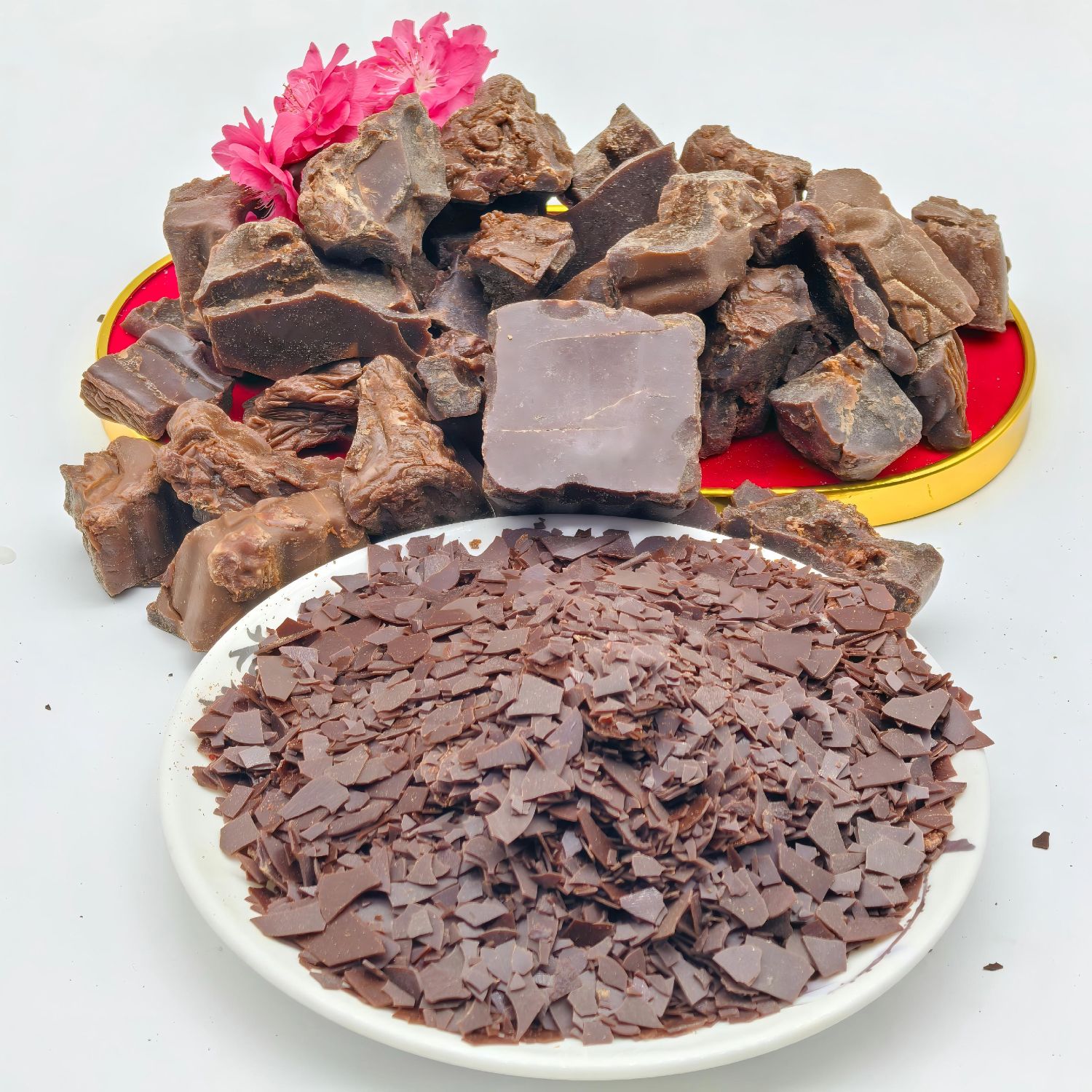
Most waxes sold as "Montana" arrive as raw lumps, still carrying the earthy grit and dark undertones of their lignite origins. Ours doesn't. We run the crude wax through a multi-stage solvent refining process that strips out the asphaltic residues and mineral fines without burning off the long-chain esters that give Montana wax its signature hardness and gloss. The result is a pale, almost translucent material that melts cleanly and lays down a film with none of that brownish haze you'd otherwise chase across a finished surface.
That extra refining shows up where it matters: in the way the wax buffs to a deep, dry luster instead of a greasy smear, and in how it holds a crisp edge on detail work without clumping. You'll notice it in the pot too—no skimming, no speckling, just a smooth, predictable melt from start to finish. For anyone who has fought with lower-grade wax that drags and dulls, the difference isn't subtle. It's the gap between a wax that merely fills the room with a nice smell and one that actually earns its place on the bench.
How We Keep Every Batch Consistent
We treat each production run like a repeatable experiment rather than a one-off event. Before anything gets mixed, weighed, or sealed, the team reviews the reference batch from the previous cycle—color swatches, viscosity readings, and finished product samples are placed side by side under the same lighting. That simple act catches drift early, often before a single unit leaves the floor.
Raw material acceptance is where consistency either holds or falls apart. Every incoming lot is quarantined until our lab clears it against a narrow specification window, not just the supplier's certificate. If a pigment shipment is even slightly off-tone, we don't try to adjust on the fly; it goes back. That rigidity sounds expensive, but it's cheaper than explaining to a customer why this month's batch looks different from last month's.
Then there's the in-process checkpoint system. Operators pull samples at fixed intervals—not when they remember—and log measurements into a shared record that anyone on the floor can read. The numbers aren't hidden in a supervisor's binder. When a trend line starts creeping toward the edge of tolerance, the line pauses and we fix the root cause before resuming. That discipline, more than any machine setting, is what keeps batch 47 tasting, feeling, or looking like batch 3.
Matching Wax Grades to Your Exact Needs
Wax grades are not a one-size-fits-all decision. The temperature of the snow and the amount of moisture in it change how a wax performs, so the grade you pick should line up with what you'll actually be skiing or riding on. Colder, drier snow calls for a harder wax that can stand up to abrasive ice crystals, while warmer, wetter snow benefits from a softer, more hydrophobic formula that prevents suction and keeps the base gliding.
Rather than stocking a single bar, think in small ranges. Many people keep three or four grades on hand and blend them when conditions fall between standard categories. Pay attention to overnight lows and midday highs, not just the forecast headline, because the snow surface can shift quickly. If you are unsure, start with a wax rated for the warmest temperature you expect—it's easier to add a harder layer than to strip a wax that's too hard for the day.
Shipping Without the Usual Headaches
Most shipping frustrations start small: a tracking link that stops updating, a customs charge nobody mentioned, a parcel that arrives looking like it lost a fight. We treat those as failures of planning, not bad luck. Every order gets a routing review before it leaves the warehouse, so the carrier and handoff points match what is actually in the box.
Paperwork is finished ahead of pickup, not after the package is already in transit. For cross-border shipments, that means duties and tax documents are filed early enough to avoid warehouse holds. Domestic routes use regional last-mile partners with photo proof of delivery, and we keep a small buffer of time in the schedule instead of promising an impossible date.
You get one point of contact from dispatch to doorstep. If a truck breaks down or a label gets smudged, you hear about it before the tracking page does. No scripted apologies, no ticket numbers that go nowhere. Just a short message with what happened, what we’re doing, and the new arrival window.
The Testing Steps Most Suppliers Skip
Most suppliers run the standard functional checks and call it a day. But the tests that actually predict field failures are the ones nobody wants to schedule—things like thermal cycling under load, voltage sag and swell tolerance, or accelerated life testing with realistic duty cycles. These aren't glamorous, and they don't fit neatly into a two-week production window, so they get quietly dropped from the plan.
The reasons are predictable: time pressure, tight margins, and a belief that the customer won't notice. Yet when a power supply fails after three months because it was never tested at 85% humidity or under rapid temperature swings, the recall cost dwarfs any savings. I've seen suppliers ship units that passed bench tests but died instantly in a cold-start scenario—because that one edge case was never written into the test spec.
If you're sourcing components or finished goods, don't assume your supplier covers these gaps. Ask for the full test report, not just the pass/fail summary. Push for at least one round of environmental stress screening and a defined soak test. The suppliers that push back are often the ones with something to hide—or simply a process that hasn't evolved past the bare minimum.
What Long-Term Buyers Actually Get
Long-term buyers don't just acquire a product or a service—they step into a relationship that shifts how they experience time. What they actually get is a quieter kind of value: the confidence of knowing that the thing they bought will keep working, keep adapting, and keep mattering long after the initial excitement fades. It's the difference between buying a tool and becoming the kind of person who uses it well.
Over months and years, the real returns show up as fewer decisions to make. The familiar becomes reliable. The initial cost gets spread thin across hundreds of small moments—the repaired seam, the upgraded software, the part that still fits. This is not about loyalty programs or points; it's about the slow build of trust that turns a purchase into a fixture of daily life.
What long-term buyers actually get is the permission to stop shopping. They get the mental space that opens up when you're no longer comparing, second-guessing, or hunting for the next version. That space, filled with usage and care rather than acquisition, is the real long-term asset—one that compounds in ways a receipt can't show.
FAQ
Our refining process removes more impurities and dark components than typical methods, resulting in a lighter color, higher melting point consistency, and better compatibility with high-end polish and coating formulations.
Yes, we regularly ship full container loads to Europe, North America, and Southeast Asia. Our production scheduling is flexible enough to accommodate both bulk contracts and smaller trial batches without disrupting delivery timelines.
We test each production lot for melting point, acid value, saponification value, and color before release. Incoming crude wax is also screened, and we keep retention samples for at least two years so any batch can be traced quickly.
Most of our output goes into car polish, shoe care products, carbon paper, and industrial release agents. Some customers also use it in cosmetics and food-contact coatings after additional purification.
Yes, we can pack in 25kg bags, 50kg cartons, or jumbo bags depending on your handling equipment. Private labels and neutral packaging are available, and we can adjust the palletizing pattern to match your warehouse racks.
For standard refined grades, we usually dispatch within 10–15 working days after receiving the deposit. Customized specs or special packaging may add another week. We provide a realistic shipping schedule before you commit.
We request photos and batch numbers within 48 hours of delivery. If a problem is confirmed to originate from our side, we offer replacement, credit, or a negotiated discount. Our goal is to resolve most cases within two weeks.
We can supply documentation for REACH, RoHS, and typical safety data requirements. For specialized uses like food packaging, we can arrange additional purification and testing, though you should verify specific end-use approval with your local authority.
Conclusion
Many suppliers sell a product that looks like refined Montana wax, but the real difference here starts with the source material and what happens after it enters our facility. We don't simply re-melt and re-pour. Instead, each incoming lot is carefully checked for impurities, then processed through a controlled refining sequence that preserves the natural hardness and gloss buyers expect from true Montana wax. Matching wax grades to your exact needs is not a guessing game. We maintain a range of drop points, penetration values, and color specifications, and we'll help you choose the right one for your coating, ink, or polishing application. Every batch is kept consistent because we follow the same temperature curves, filtration steps, and cooling rates, and we keep a retained sample from every production run for traceability.
Shipping without the usual headaches means we treat logistics as part of the product. Moisture-resistant packaging, palletized loads, and accurate documentation prevent delays at the port or damage in transit. Beyond the basics, we run the testing steps most suppliers skip: heavy metal screening, acid value checks, and long-term stability tests under varied storage conditions. What long-term buyers actually get is a supplier that remembers their spec history, anticipates reorder timing, and flags potential raw-material price shifts before they become surprises. Over time, this reduces your rejection rate and lets you plan production with fewer interruptions.
Contact Us
Contact Person: Alan Zhu
Email: [email protected]
Tel/WhatsApp: 8613931838766
Website: https://www.cnxushibeeswax.com