

Best Step-Up Transformer Brands for China: Top-Rated Options for Safe Voltage Conversion
2026-09-27
When you plug a 110V appliance into China's 220V mains, the result isn't just a tripped breaker—it's often a fried circuit board and a voided warranty. Step-up transformers are the quiet heroes that bridge this gap, but not all brands are built for the job. In this guide, we cut through the marketing noise to spotlight the best step-up transformer brands available in China for safe, everyday voltage conversion. One name that keeps surfacing among installers and expats alike is Wenma, known for robust builds and consistent output under real-world loads. Whether you're powering a US kitchen mixer or a Japanese audio rig, choosing the right transformer can mean the difference between seamless performance and costly repair bills. Here's what to look for—and which brands actually deliver.
What Happens When a Transformer’s Wattage Rating Is Stretched Too Thin
Pushing a transformer beyond its wattage rating doesn't trigger immediate failure in most cases, but it quietly accelerates aging. Winding resistance converts the extra current into heat faster than the core and insulation can dissipate it. Hot spots develop deep inside the coil where cooling air or oil never reaches, and the enamel insulation starts to lose flexibility. Over weeks or months, that thermal stress causes microscopic cracks, setting the stage for an abrupt shorted turn.
The output side also tells the story. As the core approaches saturation, the magnetizing current climbs steeply, and the secondary voltage sags under load. Equipment that expects a steady supply begins to misbehave: LED drivers flicker, motor torque drops, and sensitive electronics reset without warning. Meanwhile, the transformer hums louder than normal, a sign of magnetostriction in overdriven laminations.
Run it far enough past the nameplate rating and a single overload event can end things fast. The primary winding becomes a fuse, opening with a sharp pop and the smell of burnt varnish. If the enclosure traps the heat, the potting compound may char and expand, cracking the case from inside. The transformer rarely fails gracefully—it either trips an external breaker in time or turns into a lump of hot copper and brittle insulation.
Why Some Units Hum Loudly in Chinese Apartments—and Others Don’t
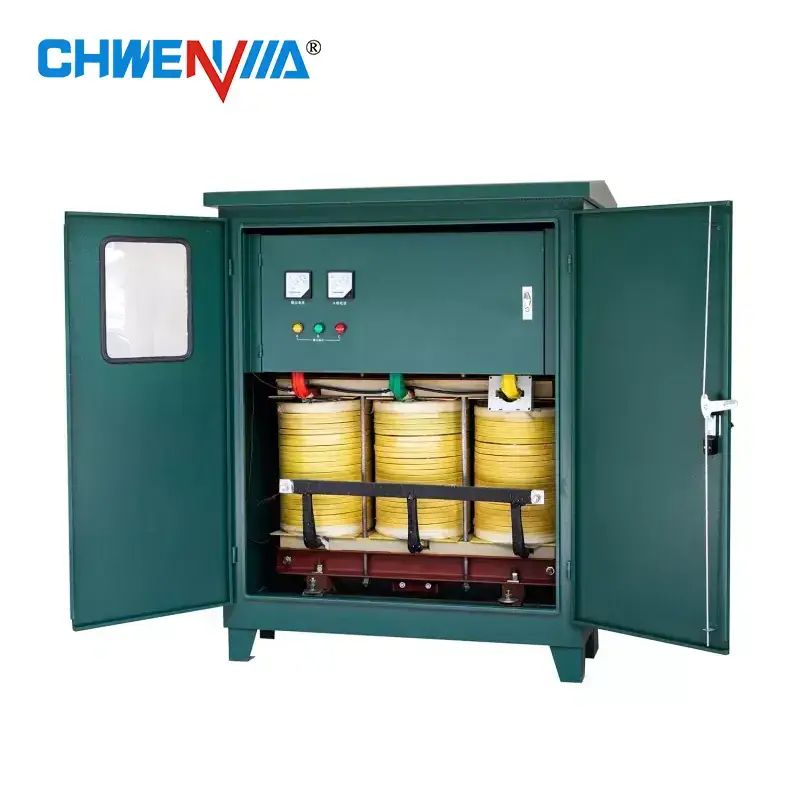
In many high-rise residential blocks across China, the source of an annoying hum often traces back to the building's electrical infrastructure. Units located directly above or adjacent to transformer rooms, elevator machine rooms, or water pump stations tend to pick up mechanical vibrations that travel through concrete floors and walls. What surprises most residents is that the identical apartment two doors down might be perfectly quiet, simply because it sits farther from these core service areas.
Construction era and developer choices also play a major role. Older buildings from the 1990s and early 2000s frequently used cheaper transformers, thinner insulation, and fewer vibration dampeners. As these components age, loose windings and worn bearings start to hum at the mains frequency of 50 Hz—a sound that gets amplified by poorly isolated mounting brackets. Newer or higher-end developments, on the other hand, often install rubber pads, spring isolators, and dedicated equipment rooms with double-layer walls, which explains why some units stay silent even when the same appliances are running.
Then there is the factor of individual electrical load and wiring condition. A unit with aging aluminum wiring, overloaded circuits, or a mismatched breaker panel can develop a noticeable buzz whenever high-power devices like air conditioners, induction cooktops, or instant water heaters kick in. The hum may appear only in certain rooms or during peak evening hours, making it seem random. Neighbors on a different phase of the building's three-phase supply might never experience the same issue, since their voltage stays more stable under load.
Build Details That Signal Long-Term Reliability Without Opening the Case
Look closely at the exterior and you'll notice the signs of thoughtful engineering. Weight distribution feels balanced, not hollow or overly dense. The seams and joints are tight, with no flex or creaking when you apply gentle pressure. Rubber gaskets around ports and covers sit flush, hinting at protection against dust and moisture long before any spec sheet is consulted.
Small things matter: stainless steel screws instead of soft alloys, a hinge that opens with smooth resistance rather than a floppy wobble, and a power button that depresses with a firm, consistent click. These aren't just cosmetic choices. They indicate a manufacturer that didn't cut corners on the parts you touch every day. That same discipline usually extends to the internals—better solder joints, cleaner cable routing, higher-grade capacitors.
Even the finish tells a story. A matte surface that resists fingerprints and minor scratches, or a brushed texture that hides wear, suggests the device was built to look presentable after years on a desk. If the product feels like it could survive a tumble from a backpack or a humid workshop, there's a good chance the parts inside were chosen with the same long-term view in mind.
How Thermal Cutoffs and Overcurrent Protection Differ Across Brands
When comparing thermal cutoffs and overcurrent protection from different manufacturers, the first thing you notice is how each brand interprets the same safety goal through its own engineering lens. Some companies focus on tighter trip tolerances, while others prioritize a wider operating temperature range or a faster response curve. For instance, one brand might use a low-melting-point alloy that reacts within milliseconds, whereas another could employ a bimetal disc that sacrifices a bit of speed for greater reset capability. These choices aren't just technical—they reflect the intended applications, from small home appliances to industrial motor controls.
Overcurrent protection adds another layer of divergence. A brand known for circuit breakers may integrate thermal and magnetic trip elements differently than a fuse-focused manufacturer, leading to distinct let-through energy characteristics. You might see one product line with replaceable fuse modules and another with resettable electronic trip units that log fault events. Physical dimensions also vary: a thermal cutoff for a hair dryer can be tiny and one-shot, while an overcurrent relay for a conveyor system is bulkier and designed for repeated operation. These practical differences mean installers and engineers often develop strong brand preferences based on field experience.
Documentation and derating guidance further separate the brands. Some provide detailed time-current curves and derating tables for altitude or enclosure temperature, making it easier to avoid nuisance tripping. Others keep their application notes sparse, expecting the buyer to rely on distributor support or prior familiarity. In troubleshooting, a brand-specific quirk—like a thermal cutoff that requires a specific mounting orientation or an overcurrent protector that is sensitive to voltage spikes—can turn a routine repair into a learning moment. Ultimately, the "best" brand depends on how these small differences align with your failure mode priorities and maintenance workflows.
The Overlooked Role of Socket Standards and Plug Adapters in Safe Operation
Most people never give a second thought to the wall socket until a device won't fit. But behind that moment of frustration lies a messy world of voltage ratings, grounding schemes, and physical shapes that quietly keep equipment safe. An adapter isn't just a piece of metal and plastic; it's a decision about whether a plug's earth pin gets connected properly, whether the live and neutral wires line up as the manufacturer intended, and whether the whole assembly can handle the load without overheating.
Take the common two-pin Europlug and the British BS 1363. The British plug has a fuse inside, a shutter mechanism on the socket, and a longer earth pin that opens those shutters. If you force a Europlug into a UK socket with a cheap travel adapter that lacks a fuse, you've bypassed a layer of protection. A short circuit in the appliance then relies entirely on the upstream breaker, which may be rated for far more current than the thin flex can safely carry. The adapter itself can melt before the breaker trips.
Even when the shape fits, the standard may not. A socket rated for 10 amps in one country may be used with an adapter that lets you plug in a 15-amp device from another region. The contacts inside that adapter are often the weakest link — thin brass strips that deform with heat, loosening over time and creating a high-resistance joint. That joint becomes a tiny heater hidden behind the wall plate or inside a power strip. So the overlooked role of socket standards and plug adapters isn't just compatibility; it's thermal management and fault containment in everyday use.
Realistic Load Calculations Before You Plug In Anything You Care About
Most people glance at a power strip's wattage rating and assume they're safe as long as the numbers add up on paper. But real-world loads are rarely steady or predictable. A device that draws 3 amps at idle might spike to 8 amps when a motor kicks in, a compressor cycles, or a capacitor charges. If you're plugging in anything you actually care about—a gaming PC, a 3D printer, a home server, even a refrigerator full of expensive medication—you need to measure the inrush current and sustained draw under your actual usage patterns, not just the label on the back.
Start with a basic kill-a-watt meter or a smart plug that logs power over time. Run the device through its worst-case scenario: cold start, full load, all peripherals connected, simultaneous processes. Watch for spikes that last more than a second, because those are what cause breakers to trip and voltage to sag. Then add a 20% buffer on top of your highest observed continuous draw. Why 20%? Because ambient temperature, aging components, and voltage fluctuations all push real consumption above the test bench numbers. If your setup hits 9 amps on a 15-amp circuit, that buffer keeps you out of the danger zone when the room gets hot in July.
Don't forget about the wiring upstream. A power strip rated for 12 amps does nothing if it's plugged into a 14-gauge extension cord that's already warm to the touch. Feel the cords after an hour of heavy use—if they're noticeably warm, you're losing voltage through resistance and building heat where you can't see it. For anything you genuinely care about, run a dedicated circuit or at least a high-quality surge protector with a built-in breaker, and check the actual amp draw periodically. Surprises are for birthday parties, not electrical panels.
FAQ
LiteFuze, VCT, and Simran tend to come up often in expat forums because their higher-end models handle 220V output cleanly. Goldsource and PowerBright also have solid units, though you’ll want to avoid their lower-priced travel converters for anything with a motor or heating element.
Multiply the appliance’s wattage by at least 1.25 and round up. A 1500W hair dryer needs a 2000W transformer minimum. If you run a coffee maker and grinder at the same time, size for the total load, not just the biggest item.
Most modern phone chargers and laptop adapters are dual-voltage, so they just need a plug adapter. The transformer is for single-voltage devices—think kitchen appliances, power tools, or older audio gear. Check the label: if it says 100-240V, skip the transformer.
LiteFuze’s LX and VCT’s VT series are built with heavier cores and better ventilation, so they can run for hours without tripping thermal protection. Cheaper units often overheat after 30-40 minutes under load, so for things like air purifiers or CPAP machines, spend a bit more.
Look for CE, UL, or ETL marks on the unit itself, not just in the listing. A thermal fuse and grounded outlet are non-negotiable. If you’re buying in China, insist on the Chinese CCC mark; without it, insurance claims after a fire get messy.
Yes, but you’ll still need a plug adapter for the physical shape. The transformer outputs 220V through a US-style socket, so you plug your device into the transformer, then use a simple adapter on the transformer’s input cord. Don’t plug the device directly into the wall with just an adapter.
Most step-up transformers hum at 50-60Hz, but the volume varies. Toroidal models from VCT are noticeably quieter and fine for bedrooms. The cheap laminated-core boxes can buzz loudly enough to be annoying in a quiet apartment, so check the core type before buying.
Buy before you fly if you want a specific brand and warranty. Inventory in Chinese electronics markets skews toward local brands or lower-quality imports. Shipping one from abroad costs more, but you avoid the gamble of a no-name unit that might not survive the first week.
Conclusion
Picking a step-up transformer for use in China goes beyond grabbing the highest wattage number on the box. If a unit is run too close to its rating, voltage drops under load and the core can overheat long before a thermal fuse trips. That is why realistic load math matters: add up the running watts of the equipment you plan to power, then factor in start-up surges from motors or compressors. A safe margin is usually 25 to 30 percent above that peak, not just above the label wattage. In Chinese apartments, loud humming often comes from loosely wound cores or thin laminations that vibrate against each other. Quieter models typically use vacuum-impregnated windings and a well-braced enclosure. Build details like tight terminal connections, a heavy transformer core, and a sturdy metal case usually point to long-term reliability without needing to open the unit.
Thermal cutoffs and overcurrent protection vary a lot between brands. Some rely on a one-time thermal fuse that kills the unit after a single overheat event, while others use resettable breakers or electronic overload sensing that recovers after cooling. That difference affects how forgiving the transformer is in everyday use. Socket standards and plug adapters get overlooked more than they should. A loose universal socket or a cheap plug adapter can create hot spots and arcing, even when the transformer itself is well built. Before plugging in anything you care about, check that the socket grips the plug firmly and matches the local outlet or your adapter set-up. The most dependable options for everyday use combine honest wattage ratings, sensible protection circuits, and socket hardware that does not compromise the connection.
Contact Us
Contact Person: Mr. Jiang
Email: [email protected]
Tel/WhatsApp: +86-15057775503
Website: https://www.avrfactory.com/