

Best Oil Immersed Voltage Stabilizer Supplier for Reliable Power Quality
2026-10-30
When your operations hinge on uninterrupted power, even minor voltage fluctuations can cause costly downtime. Oil immersed voltage stabilizers are the workhorses of heavy industry, engineered to handle demanding loads while keeping output steady. But not every supplier delivers the same level of reliability. That’s where Wenma comes in. With a track record of precision manufacturing and rigorous testing, Wenma has earned its place as a go-to source for facilities that refuse to compromise on power quality. In this blog, we’ll explore what sets their oil immersed stabilizers apart and why choosing the right partner matters as much as the equipment itself.
What Makes Oil Immersed Stabilizers Different Under Heavy Load
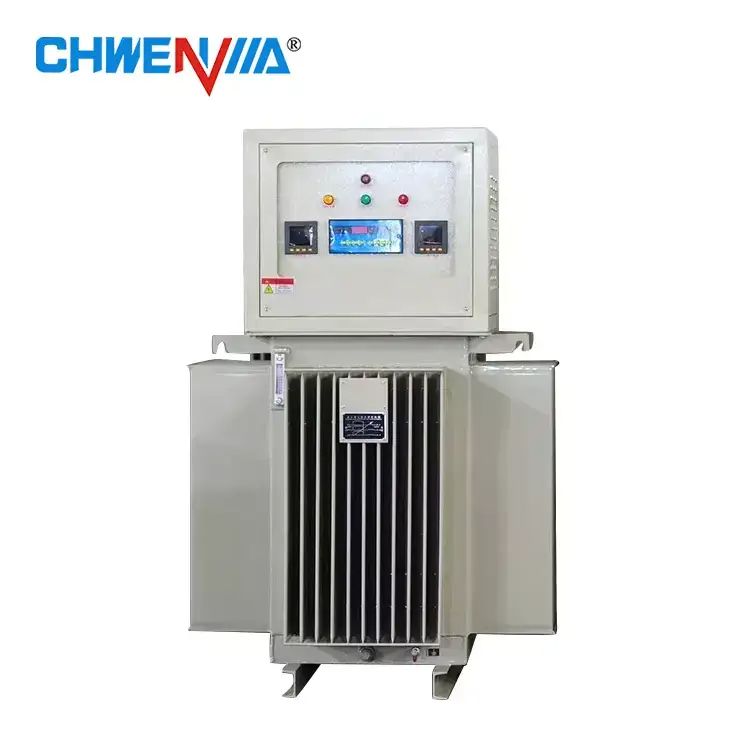
Oil immersed stabilizers earn their reputation the moment a transformer, voltage regulator, or heavy industrial load starts demanding more than the grid can smoothly deliver. Unlike their dry-type counterparts, these units rely on dielectric oil to both cool and insulate the core and windings. That oil does more than just transfer heat—it actively suppresses hot spots during sustained overloading, allowing the stabilizer to hold output voltage within tight limits even when the input sags or the load spikes repeatedly. Under heavy load, the thermal mass of the oil acts as a buffer, soaking up sudden surges and releasing heat gradually, which prevents the kind of rapid insulation aging that quietly kills lesser designs.
The second difference shows up in how these stabilizers handle mechanical stress. Heavy loads bring vibration, magnetic hum, and occasional inrush currents that can loosen connections or fatigue solid insulation in dry units. Oil immersed designs keep their windings submerged in a fluid that dampens vibration and cushions the coil assembly against mechanical shocks. This translates into quieter operation and a longer service life in harsh environments—think steel mills, pumping stations, or remote substations where maintenance windows are rare and failures are costly. The oil also continuously self-heals minor dielectric scratches and micro-discharges, something no dry insulation can do.
Finally, there is a difference in how these stabilizers respond to sustained overload without tripping or drifting. Because the oil circulates naturally or with a pump, it carries heat away from the core and dissipates it through the tank walls or external radiators. This gives the unit a higher short-time overload capability compared to air-cooled models of the same kVA rating. In practice, that means a heavy load can be started, run, and stopped repeatedly without pushing the stabilizer into thermal shutdown. Operators notice the difference in fewer nuisance alarms, tighter voltage regulation during motor starts, and a unit that simply keeps working when the rest of the electrical room is sweating.
Signs Your Power Quality Is Quietly Hurting Your Equipment
Equipment rarely fails without warning, but the clues are often subtle. Flickering lights that seem harmless may coincide with voltage sags, slowly degrading power supplies and motor windings. Unexplained reboots, random lockups on control systems, or communication errors between devices frequently point to harmonics or transient spikes rather than software bugs. Even a slight hum from transformers that wasn't there before can indicate excessive harmonic distortion, quietly heating components beyond their design limits.
Another telltale sign is overheating in places that should run cool. If electrical panels feel warm to the touch, or if breakers trip without an obvious overload, the culprit may be reactive power or a poor power factor forcing conductors to carry more current than necessary. Over time, this extra current accelerates insulation breakdown, leading to premature failure of capacitors, drives, and other sensitive electronics. Pay attention to repeated early failures of the same component—frequent replacement of power boards or motor drives often traces back to poor power quality rather than manufacturing defects.
Finally, watch for unexplained increases in energy bills. Poor power quality doesn't just damage hardware; it wastes energy as heat and forces equipment to work harder. When meters show higher consumption without a matching increase in production, harmonic distortion or voltage imbalance may be siphoning efficiency. Catching these signs early lets you address the root cause before a costly outage or equipment replacement becomes unavoidable.
Design Details That Decide How Long a Stabilizer Lasts
A stabilizer wire that still glides after two years versus one that starts ticking within months often comes down to choices made before assembly. Housing fit is the first factor. If the inner diameter of the stem housing is machined slightly too loose, the wire rattles and wears unevenly. Too tight, and any dust or dried lubricant turns into grinding paste. The practical sweet spot is often a clearance around 0.1–0.2 mm depending on wire gauge, but many budget boards skip that fine-tuning. Insert material matters as well: POM housings hold their shape under repeated stress, while softer ABS can oval out and introduce slop over time.
Lubricant retention is another detail that separates long-lasting stabilizers from those that feel scratchy after a few weeks. Shallow grease grooves or housings without a proper sealing lip push lubricant out quickly, leaving plastic-on-metal contact at the bend points. Better designs include recessed channels near the housing entry or a small reservoir inside the stem so the grease migrates gradually instead of disappearing. Bent wire ends also play a role: slightly rounded tips reduce scoring inside the insert, while sharp cut ends act like tiny files with every keystroke.
Mounting style and plate cut tolerances often get overlooked. If the stabilizer clips do not snap fully into the plate or PCB, the entire assembly flexes and the wire twists under load, accelerating uneven wear. Screw-in stabilizers with rigid metal washers tend to stay seated longer than clip-ins in daily use. The angle where the wire enters the stem should also be perfectly straight; even a subtle off-axis bend concentrates wear on one side and eventually causes binding. These small design choices add up fast, and they are what separate a stabilizer that lasts five years from one that needs re-lubing every few months.
Choosing a Supplier Who Understands Your Local Grid Conditions
Grid conditions vary far more than most equipment catalogs suggest. A supplier who actually knows your region will account for voltage sags, harmonic distortion, and the way local utilities handle peak demand. That kind of familiarity can prevent a perfectly good inverter or transformer from failing three months after installation.
Ask how they handle brownouts, phase imbalance, or frequent switching events on your side of the meter. A supplier with local field experience will already have adjusted component ratings, added protective relays, or recommended different grounding schemes for nearby substations. You shouldn't have to teach them your grid's quirks during a site visit.
Working with someone who understands interconnection rules and inspection habits in your area also saves time. They'll know which documentation the utility expects, how long approvals typically take, and what inspectors tend to flag. That practical knowledge reduces rework and keeps your project moving without unnecessary delays.
Balancing Capacity, Cost, and Future Expansion Without Guesswork
Too many capacity decisions still come down to someone's hunch. A manager remembers a busy week last year and insists on doubling the servers, while the actual logs show that request volume has been flat for eight months. The better approach is to start with what your infrastructure already tells you—peak load timing, average utilization, and how those numbers have shifted over the past few quarters. From there, you can calculate a realistic headroom percentage instead of pulling a number out of thin air. Buying based on observed behavior rather than anxiety means you pay for what you use, and nothing more.
Future expansion doesn't have to be a gamble either. If you design around modular components—adding one node, one instance, or one storage tier at a time—you can defer spending until a specific metric starts brushing against its threshold. That turns capacity increases into routine, low-drama events spread across multiple budget cycles instead of a single high-stakes purchase. For resources that must be reserved ahead of time, like connection pools or load balancer capacity, run targeted load tests under realistic traffic patterns rather than trusting a vendor's default recommendation. When actual demand approaches 70 or 80 percent of the tested limit, you know it's time to act. No guessing required, just a clear trigger.
Maintenance Habits That Keep Oil Immersed Units Running for Decades
Oil sampling isn't a once-a-year checkbox. Technicians who get decades out of oil immersed units pull samples at least twice a year and watch dissolved gas trend lines, not just pass/fail flags. A slow climb in hydrogen or acetylene tells you about overheating or arcing long before a failure shows up on a routine electrical test. Pair that with regular moisture checks; water content above 25 ppm in mineral oil accelerates paper aging faster than most people realize.
Beyond the oil itself, the small mechanical habits matter just as much. Keep silica gel breathers dry, inspect gaskets and valves for slow leaks, and retorque connections during scheduled outages. Units that run for decades rarely sit untouched. They get filter carts rolled out for periodic degassing and sludge removal, and their cooling fins stay clear of dust and debris so heat doesn't creep into the windings year after year.
FAQ
Look for a supplier with a proven history in your specific voltage range and environment, not just a generic catalog. Ask about the insulating oil grade, the core lamination quality, and whether they provide actual thermal test reports. A supplier that willingly shares failure rate data or lets you visit an existing installation tends to be far more trustworthy than one relying on glossy claims.
The oil bath does more than cool components; it dampens mechanical noise, reduces hot spots, and protects internal windings from moisture and dust. That leads to less drift in output voltage and slower degradation of insulation. In practice, facilities with frequent load swings often see fewer nuisance trips and steadier voltage to sensitive equipment.
Heavy manufacturing, water treatment plants, textile mills, and any site with large motor loads or unstable grid supply usually benefit first. The common thread is continuous operation where a voltage dip or spike can stop production. Oil immersed designs handle sustained overloads better, so industries with 24/7 processes tend to choose them over smaller dry units.
Yes, but the real difference is in how the thermal mass of the oil absorbs sudden heat spikes. Instead of the winding temperature jumping instantly during a surge, the oil spreads the heat over a larger volume. That means the stabilizer can ride through short-term voltage swings at full load without tripping, as long as the supplier sized the cooling fins and oil volume correctly for your input range.
You are mainly checking oil level, testing dielectric strength once or twice a year, and inspecting for leaks around gaskets and valves. The oil does not need frequent replacement unless it becomes contaminated or acidic. A good supplier will give you a simple checklist and the expected oil life based on your operating temperature, rather than demanding rigid service contracts.
Ask for field data from sites running the same model for at least two years. Reliable suppliers usually can point to specific installations, not just laboratory simulations. Also check the quality of terminal connections, the presence of oil level indicators, and whether the tank is pressure tested. Small details like welded lifting lugs and reinforced base plates often tell you more about long-term durability than the rated capacity.
Most experienced suppliers will offer custom tap configurations, non-standard input ranges, and even alternative insulating fluids for extreme cold or fire-sensitive areas. The key is that custom work should not dramatically extend lead time. If a supplier says yes but takes six months for a simple winding change, they likely outsource the core engineering. A good sign is when they ask about your actual grid limits and load profile before quoting a custom design.
Conclusion
When a stabilizer is filled with oil, the conversation shifts from simple voltage correction to thermal endurance under sustained heavy loads. Unlike dry-type units that rely on air circulation, oil immersion pulls heat away from the core and windings far more efficiently, which means the unit can sit at high capacity for hours without drifting out of spec. But that advantage only holds if the internal design is right: the quality of the insulating oil, the spacing between coils, and the way the tank is sealed all decide whether the stabilizer will quietly degrade after a few years or keep running for decades. Many operators don't realize how much poor power quality is already costing them—repeated tripping, premature motor bearing wear, flickering control panels—until the damage shows up in expensive downtime. A supplier who actually understands your local grid conditions will ask about the real voltage swing, the frequency of brownouts, and the type of loads you run, rather than pushing a one-size-fits-all kVA number.
That local knowledge matters just as much as the raw capacity. Choosing the right stabilizer means balancing today's actual load against future expansion, without paying for headroom you'll never use or, worse, undersizing and forcing the unit to run hot. The best suppliers don't guess—they look at your existing switchgear, your planned additions, and the pattern of voltage fluctuations over a typical week. Then there is the long-term picture: maintenance habits determine whether the oil stays clean, the gaskets remain tight, and the silica gel breather keeps moisture out. A well-built oil immersed unit will tolerate harsh conditions, but only if someone checks the oil level, tests the dielectric strength periodically, and replaces silica gel before it turns pink. When you find a supplier who combines careful design, honest capacity guidance, and clear maintenance expectations, you are not just buying a stabilizer—you are buying the assurance that your equipment will keep working reliably, year after year, without the quiet kind of failure that shows up as a burnt board or a stalled production line.
Contact Us
Contact Person: Mr. Jiang
Email: [email protected]
Tel/WhatsApp: +86-15057775503
Website: https://www.avrfactory.com/